- What is Architectural BIM Modeling
- What is Structural BIM Modeling
- Architectural vs Structural BIM Modeling: Key Differences
- How Architectural and Structural BIM Work Together
- Common Challenges in BIM Coordination
- Role of CAD to BIM in Architectural and Structural Modeling
- Benefits of Using BIM for Architectural and Structural Design
- When to Use Architectural vs Structural BIM Modeling
- Why Companies Are Outsourcing BIM Modeling in 2026
- How Optimar Precon Supports BIM Modeling Requirements
- Choose the Right BIM Approach for Better Project Outcomes
- FAQs
Quick Answer: The architectural BIM model deals with spatial designs such as floors, walls, ceilings, doors, windows, and finishes, which can be applied to design development, visualization, and construction drawings. The structural BIM model involves the analysis of the load-bearing structure, foundation, columns, beams, slabs, and connections. Both disciplines produce separate models that are combined into a federated environment for coordination and clash detection before construction begins.
Architectural vs structural BIM modeling is a critical comparison for construction professionals aiming to improve coordination, accuracy, and project outcomes. While both disciplines are part of the broader BIM ecosystem, they serve different purposes and require distinct expertise.
In 2026, with increasing project complexity and tighter deadlines, companies rely on integrated BIM Services to ensure seamless collaboration between architectural and structural teams. Understanding the differences between these two modeling approaches is essential for better decision-making and efficient project execution.
What is Architectural BIM Modeling
Architectural BIM modeling focuses on the design and visualization of a building’s physical and functional aspects. It represents how a structure will look and how spaces will be utilized.
Key elements of architectural BIM include:
- Floor plans and layouts
- Walls, doors, and windows
- Interior and exterior design elements
- Facade and aesthetics
- Space planning and functionality
Using advanced Architectural BIM Services, designers can create detailed 3D models that help stakeholders visualize the final outcome before construction begins.
Why it matters
Architectural BIM helps:
- Improve design accuracy
- Enhance client visualization
- Support better planning and approvals
- Reduce design-related errors
What is Structural BIM Modeling
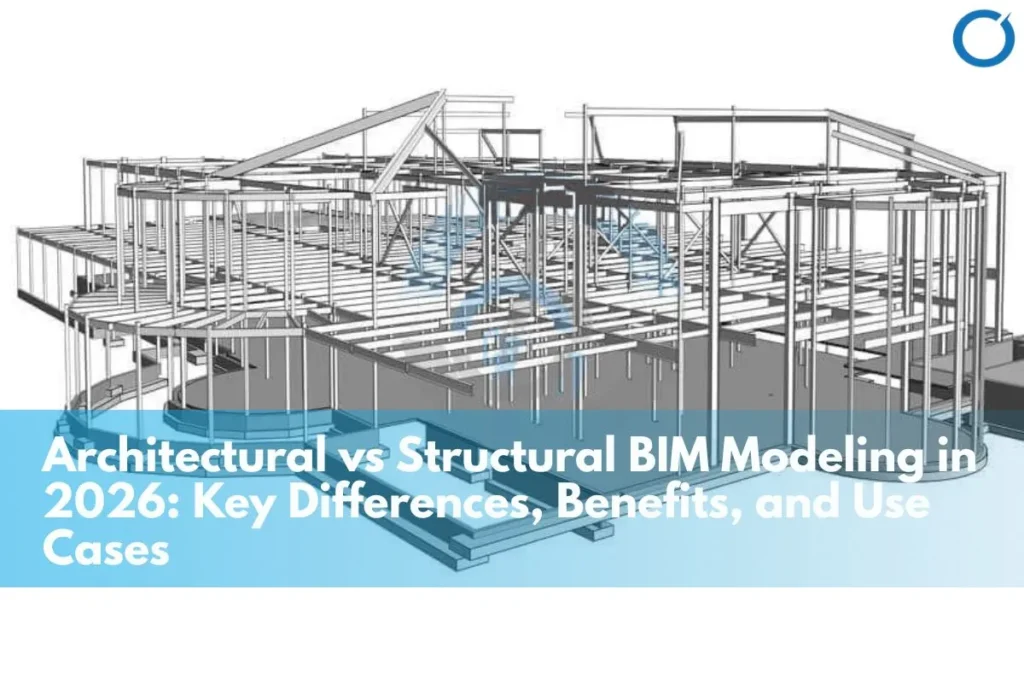
Structural BIM modeling focuses on the load-bearing components of a building. It ensures that the structure is stable, safe, and capable of supporting design requirements.
Key elements of structural BIM include:
- Beams and columns
- Foundations and slabs
- Structural framing systems
- Reinforcement detailing
- Load calculations and analysis
By leveraging Structural BIM Services, engineers can develop accurate models that align with safety standards and structural performance requirements.
Why it matters
Structural BIM helps:
- Ensure structural stability and safety
- Improve accuracy in load calculations
- Reduce construction risks
- Support efficient material usage
Architectural vs Structural BIM Modeling: Key Differences
Understanding the differences between architectural and structural BIM modeling helps teams coordinate better and avoid conflicts.
Core Differences
| Aspect | Architectural BIM | Structural BIM |
|---|---|---|
| Focus | Design and aesthetics | Structural integrity |
| Purpose | Visualization and planning | Safety and stability |
| Elements | Walls, doors, layouts | Beams, columns, foundations |
| Users | Architects, designers | Structural engineers |
| Output | Design models | Analytical and structural models |
In simple terms:
- Architectural BIM shows how the building looks
- Structural BIM ensures how the building stands
Both are essential and must work together for successful project delivery.
How Architectural and Structural BIM Work Together
While these disciplines are different, they are closely interconnected. A lack of coordination between them can lead to design conflicts, delays, and increased costs.
Teams use integrated workflows supported by BIM Coordination Services and Clash Detection Services to ensure alignment between architectural and structural models.
Benefits of integration:
- Early identification of design conflicts
- Improved communication between teams
- Reduced rework during construction
- Faster project delivery
Common Challenges in BIM Coordination
Despite advancements in BIM technology, coordination between architectural and structural models still presents challenges.
Key challenges include:
- Misalignment between design and structural elements
- Inconsistent modeling standards
- Incomplete or unclear project data
- Communication gaps between teams
- Errors during model integration
To address these issues, many companies rely on structured workflows and expert-led BIM modeling Services to maintain consistency and accuracy.
Role of CAD to BIM in Architectural and Structural Modeling
Many projects start with 2D drawings, so BIM teams convert them into BIM models for better visualization and coordination.
Using CAD to BIM Services, teams can:
- Convert legacy drawings into intelligent 3D models
- Improve coordination between disciplines
- Enhance project accuracy and efficiency
In addition, CAD drafting services are often used to refine drawings and ensure that both architectural and structural models are aligned with project requirements.
Benefits of Using BIM for Architectural and Structural Design
BIM modeling delivers significant advantages when teams effectively integrate architectural and structural disciplines.
Key benefits include:
- Improved design accuracy and visualization
- Enhanced collaboration between teams
- Reduced project risks and rework
- Better cost control and planning
- Faster project execution
By combining both disciplines under unified building information modeling services, construction companies can achieve better outcomes across all project stages.
When to Use Architectural vs Structural BIM Modeling
Project teams should use both modeling types strategically based on specific project requirements.
Choose Architectural BIM when:
- Designing building layouts and aesthetics
- Presenting concepts to clients
- Planning space utilization
Structural BIM works best when:
- Analyzing load-bearing elements
- Designing structural frameworks
- Ensuring safety and compliance
Use both together when:
- Working on large or complex projects
- Coordinating multiple disciplines
- Improving project efficiency and accuracy
Why Companies Are Outsourcing BIM Modeling in 2026
With increasing demand for high-quality BIM models, many construction companies are outsourcing both architectural and structural BIM modeling.
Key reasons include:
- Access to skilled BIM professionals
- Reduced operational costs
- Faster turnaround times
- Scalability for large projects
- Improved accuracy and consistency
Outsourcing allows companies to focus on core construction activities while experts handle modeling and coordination tasks efficiently.
How Optimar Precon Supports BIM Modeling Requirements
Optimar Precon helps contractors, architects, and engineers deliver accurate and coordinated BIM models across disciplines.
Our capabilities include:
- Advanced BIM Services tailored to project needs
- Expertise in Architectural BIM Services and Structural BIM Services
- Accurate modeling through Point Cloud to BIM Services
- End-to-end support via scan to BIM services
- Dedicated teams aligned with your project scope
We help you improve coordination, reduce errors, and deliver projects efficiently.
Choose the Right BIM Approach for Better Project Outcomes
Understanding the difference between architectural and structural BIM modeling is essential for making informed decisions and improving project performance.
By using the right approach and ensuring proper coordination between disciplines construction teams can achieve better accuracy, reduce risks, and streamline workflows.
If you are looking to enhance your BIM capabilities, improve coordination, and deliver projects with confidence, working with an experienced BIM partner can make a significant difference.
Get a Quote or Talk to a BIM Expert at Optimar Precon to optimize your BIM workflows.
FAQs
The architectural BIM modeling comprises the aesthetic elements of the building, such as walls, floors, ceilings, doors, windows, and finishes, among others. Structural BIM modeling entails modeling the load-bearing elements of the foundation, columns, beams, slab, and structural connections, and so forth. Both models are created independently of each other by each discipline and brought together for coordination purposes in a federated model.
LOD 300 is the minimum for construction documentation and initial coordination. LOD 350 is required for full coordination, including connections and interfaces, particularly where structural elements interact with MEP systems. The LOD 400 is employed in the production of structural steel and precast elements. Specific LOD for each type of element during various milestones of the project is provided in the BIM Execution Plan (BEP).
Yes, and they should. In any construction project, the BIM models related to architecture and structure will be brought together with the MEP BIM models to create a federated environment for clash detection, where any clash between disciplines will be found. Any structural beam crossing an architectural opening or a structure clashing with a partition will be identified and sorted out in the federated BIM model.
Revit by Autodesk is the most popular software for architectural and structural modeling. The software provides users with the opportunity to model using BIM simultaneously within one interface, which helps in the coordination of views between disciplines and also alerts on any conflicting views automatically. Tekla structures are mainly used for modeling of structural steel.
For any project where there is a structural system involving almost all types of commercial, industrial, and residential buildings, both types of models are necessary. Producing only one and attempting to coordinate manually with 2D drawings from the other discipline is a common source of coordination failures and RFIs. The federated model that combines both is the foundation of effective BIM coordination.