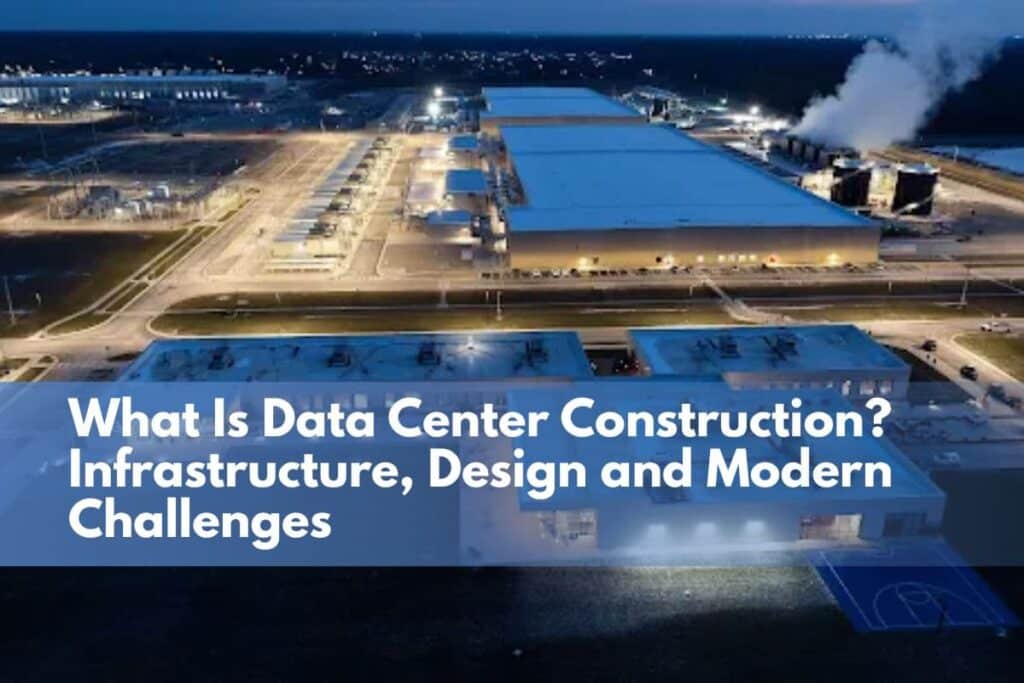
In short, Data center construction is the design, engineering, and development of specialized facilities that house servers, networking equipment, and computing infrastructure. Unlike standard commercial buildings, data centers are built to operate continuously without interruption, requiring multiple layers of redundancy across power, cooling, and network systems. The construction complexity is driven by dense MEP systems, strict thermal management requirements, and the need for coordinated electrical and mechanical infrastructure within constrained spatial envelopes.
Data center construction has become one of the fastest growing segments of the global construction industry. As digital services, cloud computing, artificial intelligence, and streaming platforms continue to expand, companies require massive infrastructure to store and process data.
A data center is a highly specialized facility that houses servers, networking equipment, storage systems, and computing infrastructure. These buildings support the digital backbone of modern businesses, from banking platforms and online shopping to video streaming and cloud services.
Because these facilities operate continuously and must maintain extremely high uptime levels, data center construction requires advanced engineering, precise planning, and highly coordinated building systems.
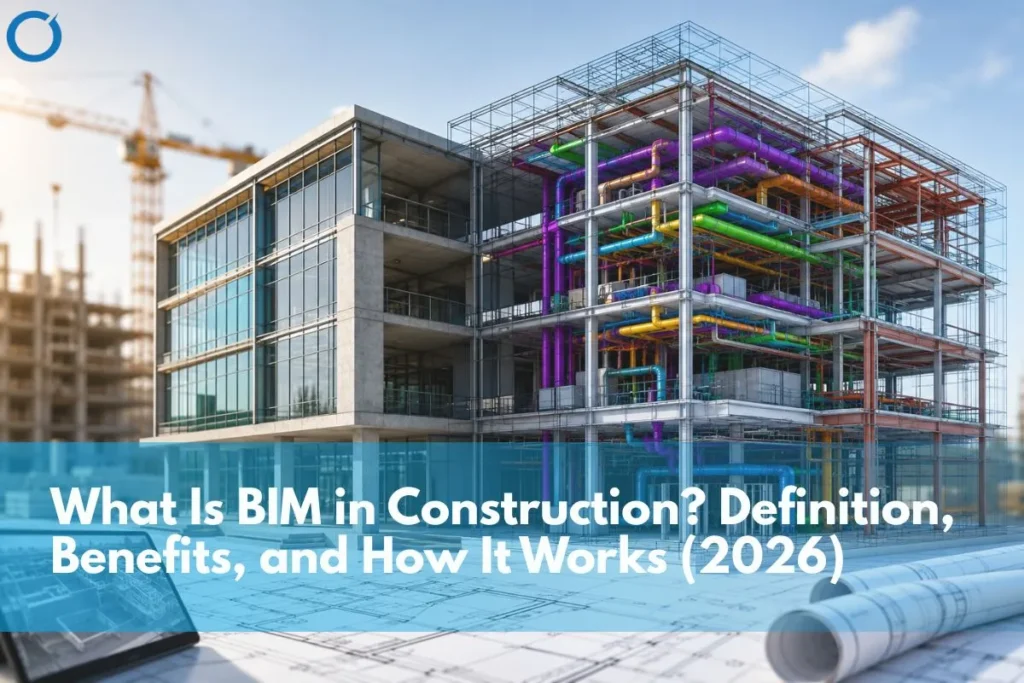
Many contractors now rely on digital workflows such as BIM modeling services to coordinate electrical, mechanical, and structural systems during data center design and construction.
Understanding Data Center Construction
Data center construction refers to the design, engineering, and development of facilities built specifically to host computing infrastructure. Unlike traditional commercial buildings, data centers are designed with strict performance, reliability, and energy efficiency requirements.
The primary goal of a data center is to ensure that servers and computing systems operate continuously without interruption. Even a short outage can result in significant financial losses for businesses that rely on digital services.
To achieve this reliability, data centers include multiple layers of redundancy across power systems, cooling infrastructure, and network connectivity.
Key Components of Data Center Infrastructure
Modern data centers consist of several critical systems that must work together to maintain stable operations.
Server Infrastructure
The core of any data center is its server infrastructure. Servers process and store digital data used by applications, websites, and enterprise platforms.
Server rooms are typically organized into equipment racks arranged in rows. These racks contain computing hardware connected to high-speed network systems.
Electrical Power Systems
Power reliability is one of the most important aspects of data center infrastructure. Data centers consume large amounts of electricity and must maintain continuous operation.
To ensure reliability, electrical systems often include:
- Primary utility power connections
- Backup diesel generators
- Uninterruptible power supply (UPS) systems
- Power distribution units
Contractors frequently rely on construction estimating services to accurately plan electrical system capacity and infrastructure costs for these facilities. See our guide on construction takeoff and estimation
Cooling Systems
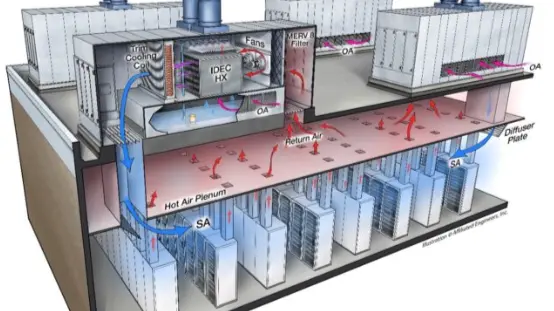
Servers generate significant heat during operation. Without effective cooling systems, equipment performance would quickly decline.
Modern data center cooling systems include several technologies designed to maintain stable temperatures.
- Computer room air conditioning units
- Chilled water cooling systems
- Liquid cooling technology
- Hot aisle and cold aisle containment
Efficient cooling infrastructure plays a major role in reducing operational energy consumption.
Network Connectivity
Data centers require high-speed network connections to transmit digital data between servers and users around the world. Fiber optic networks and redundant communication pathways help ensure uninterrupted connectivity.
Reliable network infrastructure is essential for maintaining the performance of digital services.
Types of Data Centers
Data centers vary in size and purpose depending on the organizations that operate them.
Enterprise Data Centers
Enterprise data centers are owned and operated by individual organizations. These facilities support internal business operations such as corporate applications and data storage.
Colocation Data Centers
Colocation facilities allow multiple companies to rent space within a shared data center environment. Businesses install their servers inside the facility while the operator manages infrastructure such as power and cooling.
Hyperscale Data Centers
Hyperscale data centers are extremely large facilities built by global technology companies. These data centers can contain hundreds of thousands of servers and require massive infrastructure capacity.
Hyperscale facilities are commonly used to support cloud computing platforms and large digital ecosystems.
Challenges in Data Center Construction
Although data centers represent a major opportunity for contractors and developers, they also present several technical challenges.
Energy Consumption
Data centers consume large amounts of electricity. Engineers must design power systems that can support high demand while maintaining reliability.
Thermal Management
Managing heat generated by server infrastructure is one of the most complex challenges in data center design.
Construction Speed
Technology companies often require rapid construction timelines to support expanding digital services.
Complex System Coordination
Data centers contain numerous building systems including electrical networks, cooling systems, structural infrastructure, and networking equipment.
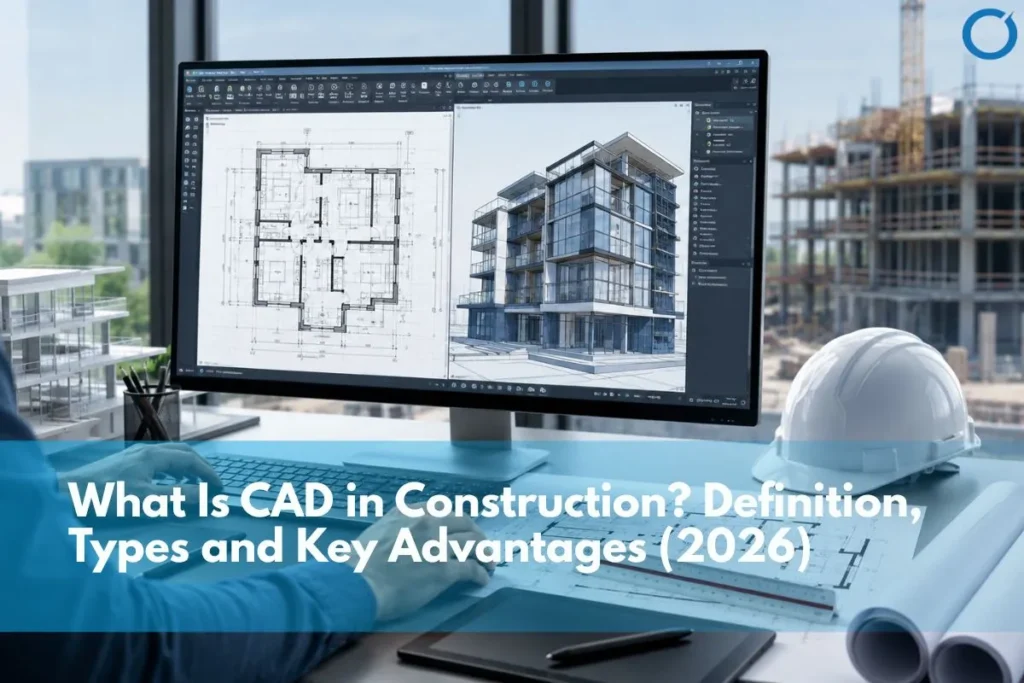
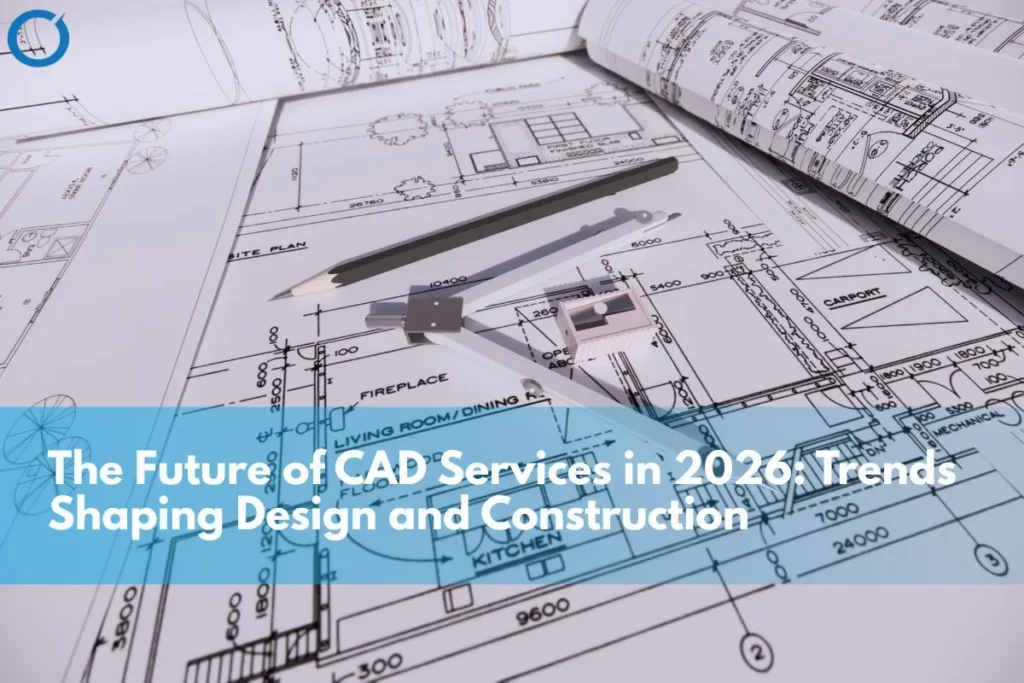
To manage these complex systems, project teams often use detailed documentation produced through CAD drafting services to ensure accurate construction drawings and installation layouts. See our guide on what are CAD services
Role of BIM in Data Center Projects
Because data centers involve highly complex infrastructure, many contractors rely on Building Information Modeling (BIM) during the planning and design stages.
BIM allows project teams to create digital 3D models that include structural, electrical, and mechanical systems within a shared environment for a detailed breakdown. See BIM in data center construction.
This digital coordination helps teams detect design conflicts early and improve construction planning.
If you are unfamiliar with BIM workflows, you can explore our guide explaining what is BIM in construction and how it supports modern building projects.
Why Data Center Construction Is Growing Rapidly
The rapid growth of cloud computing, artificial intelligence, and digital services has significantly increased the demand for data centers worldwide.
Businesses rely on these facilities to support online platforms, enterprise systems, financial services, and global communication networks.
As digital infrastructure continues to expand, construction firms must build more advanced data centers with better energy efficiency, greater computing capacity, and stronger system reliability.
This growth is creating new opportunities for contractors, engineers, and construction professionals involved in preconstruction planning and digital design coordination.
FAQs
Data center construction is the design, engineering, and development of specialized facilities built to house servers, networking equipment, storage systems, and computing infrastructure. Data centers differ from standard commercial buildings because engineers design them to operate continuously without interruption, with multiple redundancy layers across power, cooling, and network systems.Even brief outages can result in significant financial losses for businesses dependent on digital services.
Data centers form the physical infrastructure behind cloud computing, AI platforms, online banking, streaming services, and enterprise applications. Servers housed in a data center process every request when a user accesses a website, streams a video, or uses a cloud application. As digital services continue to expand globally, the demand for reliable, high-capacity data center infrastructure is growing rapidly across the USA, UK, and internationally.
A modern data center includes five critical system layers: electrical power infrastructure, including UPS systems, backup generators, and power distribution units; cooling systems, including CRAC units, chilled water systems, and hot/cold aisle containment; server infrastructure organized into equipment racks; high-speed fiber optic network connectivity with redundant pathways; and building management systems that monitor performance across all infrastructure components simultaneously.
Hyperscale data centres are extremely large facilities typically exceeding 100,000 square feet built and operated by global technology companies such as Amazon, Microsoft, Google, and Meta to support their cloud computing platforms. These facilities can contain hundreds of thousands of servers and require massive power and cooling infrastructure. Rack densities in hyperscale environments often exceed 20-30kW per rack, making MEP coordination and thermal management significantly more complex than in standard enterprise data centers.
BIM enables project teams to create coordinated 3D models that integrate structural, electrical, and mechanical systems within a single digital environment before construction begins. For data centers where electrical distribution, cooling infrastructure, and cable management systems must coexist within constrained ceiling voids and raised-floor zones, BIM coordination and clash detection are essential, not optional. Resolving conflicts digitally during preconstruction costs a fraction of what it costs to reroute systems on site during installation.