
- Understanding BIM in the Modern Construction Industry
- What Are Smart Buildings?
- What Are Digital Twins?
- How BIM Enables Digital Twins
- The Role of BIM in Smart Building Design
- Benefits of BIM and Digital Twins for Smart Buildings
- Industries Driving the Adoption of BIM Digital Twins
- Challenges in Implementing BIM Digital Twins
- The Future of BIM in Smart Buildings and Digital Twins
- Why Companies Are Outsourcing BIM Services
- How Optimar Precon Supports BIM and Smart Building Projects
- The Road Ahead for BIM in Smart Buildings and Digital Twins
- FAQs
The future of BIM in smart buildings and digital twins is transforming how modern construction projects are designed, built, and managed. Building Information Modeling (BIM) has already changed the way architects, engineers, and contractors collaborate, but when integrated with smart building technologies and digital twins, BIM becomes a powerful platform for lifecycle building management.
Across the global construction industry, organizations are moving toward data-driven project delivery, where BIM models extend beyond design and construction into operations, maintenance, and facility management. For contractors, developers, and facility owners, this integration means smarter buildings, improved efficiency, and long-term cost savings.
In this article, we explore how BIM, smart buildings, and digital twins are shaping the future of construction and why forward-thinking companies are investing in these technologies.
Understanding BIM in the Modern Construction Industry
Building Information Modeling (BIM) is a digital representation of the physical and functional characteristics of a building. It allows project teams to create a shared 3D model containing detailed information about materials, systems, dimensions, and construction workflows.
Instead of relying on traditional drawings alone, BIM enables stakeholders to collaborate within a centralized digital environment.
Key capabilities of BIM include:
- 3D modeling of building components
- Clash detection and coordination
- Construction sequencing (4D BIM)
- Cost estimation and budgeting (5D BIM)
- Facility management data integration
Today, BIM is not just a design tool. It is becoming the foundation of intelligent building systems and digital twins.
What Are Smart Buildings?
A smart building uses advanced technologies such as sensors, IoT devices, and automation systems to monitor and manage building performance in real time.
Smart buildings can automatically adjust lighting, HVAC, security systems, and energy consumption based on usage patterns.
Common technologies used in smart buildings:
- Internet of Things (IoT) sensors
- Smart HVAC systems
- Automated lighting systems
- Energy monitoring systems
- Intelligent security and access control
When BIM data is integrated with these technologies, the building becomes a dynamic digital ecosystem rather than just a static structure.
What Are Digital Twins?
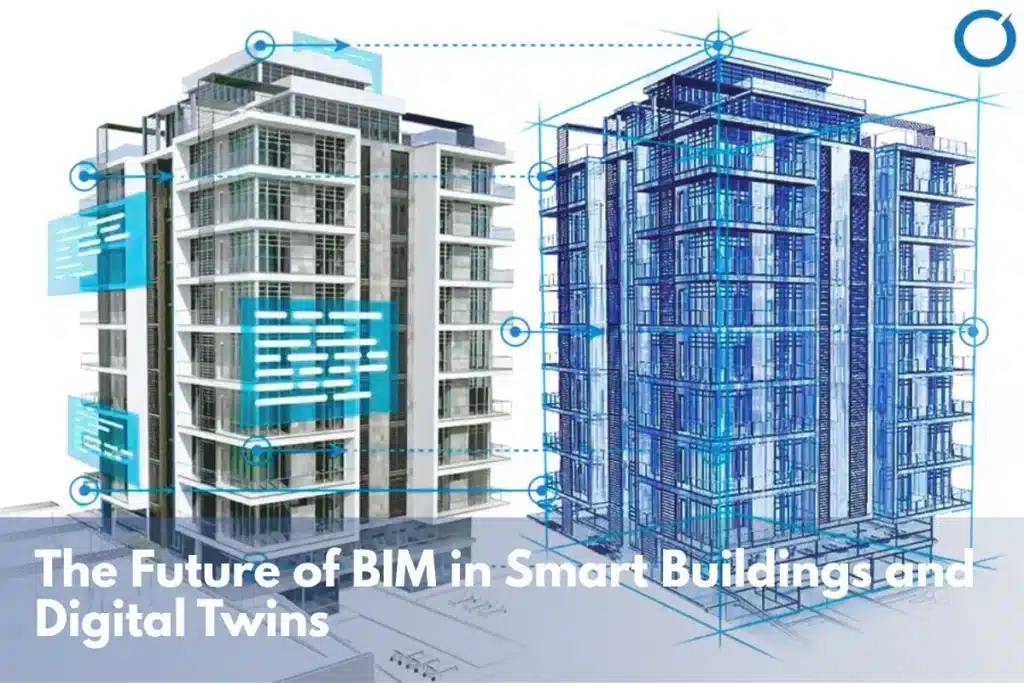
A digital twin is a virtual replica of a physical building that continuously updates using real-time data from sensors and operational systems.
Digital twins allow building owners and facility managers to monitor performance, predict maintenance issues, and optimize building operations.
Unlike a static BIM model created during design, a digital twin evolves throughout the building’s lifecycle.
Digital twins help organizations:
- Monitor building performance in real time
- Predict equipment failures
- Optimize energy consumption
- Improve facility management decisions
- Enhance building lifecycle planning
This is where the future of BIM in smart buildings and digital twins becomes particularly impactful.
How BIM Enables Digital Twins
BIM acts as the data foundation for digital twin technology. During the design and construction phases, BIM models capture detailed information about every building component.
This information becomes the baseline for creating a digital twin.
BIM provides critical data such as:
- Structural information
- MEP system layouts
- Equipment specifications
- Materials and component details
- Construction documentation
When IoT sensors are connected to these systems, the BIM model evolves into a living digital twin that reflects real building conditions.
Digital twin environments depend on intelligent electrical networks that connect sensors, automation systems, and monitoring devices. Using Electrical BIM Modeling Services, engineers can design coordinated electrical infrastructure for modern smart buildings.
The Role of BIM in Smart Building Design
Smart buildings require precise coordination between multiple systems, including electrical, HVAC, plumbing, automation, and security networks.
BIM supports this complexity by enabling integrated system design and coordination.
BIM improves smart building development through:
- Integrated System Coordination
BIM allows architects, engineers, and contractors to coordinate building systems within a single model, reducing conflicts during installation. - Accurate MEP Planning
Smart buildings depend heavily on MEP systems. BIM ensures accurate routing and system placement. - Data-Driven Design Decisions
Design teams can analyze building performance using BIM simulations before construction begins. - Improved Construction Efficiency
Contractors can visualize installations and sequencing, reducing delays and costly rework.
Benefits of BIM and Digital Twins for Smart Buildings
Organizations that combine BIM with digital twin technology gain significant operational advantages.
- Better Building Performance
Real-time monitoring helps optimize building systems such as HVAC, lighting, and energy consumption. - Predictive Maintenance
Digital twins can detect early signs of equipment failure, allowing maintenance teams to address issues before breakdowns occur. - Energy Efficiency
Smart buildings powered by BIM data can reduce energy consumption and operational costs. - Improved Facility Management
Facility managers gain access to detailed asset information, maintenance schedules, and system performance data. - Long-Term Cost Savings
By reducing maintenance issues and improving operational efficiency, digital twins deliver measurable financial benefits over the building lifecycle.
Industries Driving the Adoption of BIM Digital Twins
The integration of BIM and digital twins is growing across several industries.
Key sectors adopting these technologies include:
- Commercial office buildings
- Healthcare facilities
- Airports and transportation hubs
- Data centers
- Industrial manufacturing plants
- Smart city infrastructure projects
Large infrastructure and complex facilities benefit the most because they require continuous monitoring and operational optimization.
Challenges in Implementing BIM Digital Twins
Despite the benefits, implementing BIM-enabled digital twins requires careful planning.
Common challenges include:
- Data integration across systems
- High initial technology investment
- Skilled BIM and digital twin professionals
- Standardized data management frameworks
Organizations often overcome these challenges by working with experienced BIM service providers that specialize in model development, coordination, and data integration.
The Future of BIM in Smart Buildings and Digital Twins
The construction industry is rapidly moving toward intelligent infrastructure, where buildings continuously generate and analyze operational data.
Several technological trends will accelerate this transformation.
- AI-Powered Building Analytics
Artificial intelligence will analyze building performance data to improve efficiency and sustainability. - Smart Cities Integration
BIM-enabled digital twins will be connected to city-wide infrastructure systems such as transportation and utilities. - Cloud-Based BIM Platforms
Cloud collaboration will allow project teams and facility managers to access building data from anywhere. - Sustainability and Net-Zero Buildings
BIM digital twins will help optimize energy performance and support carbon reduction strategies. - Advanced Simulation and Predictive Modeling
Future BIM platforms will simulate building performance before construction begins, improving long-term operational outcomes.
Why Companies Are Outsourcing BIM Services
As BIM technologies evolve, many construction companies choose to outsource BIM modeling services to specialized teams.
Outsourcing allows organizations to access skilled BIM professionals without building large in-house teams.
Benefits of outsourcing BIM services include:
- Access to experienced BIM engineers
- Faster project delivery
- Reduced operational costs
- Scalable support for large projects
- High-quality coordinated models
Global construction firms often collaborate with BIM service providers to support projects across multiple regions.
How Optimar Precon Supports BIM and Smart Building Projects
At Optimar Precon, we provide advanced BIM modeling and coordination services that support modern construction workflows, including smart building design and digital twin integration.
Our team delivers accurate BIM models that improve coordination, reduce construction risks, and support data-driven project execution.
Our BIM services include:
- Architectural BIM Modeling
- Structural BIM Modeling
- Mechanical BIM Modeling
- Electrical BIM Modeling
- Plumbing BIM Modeling
- Clash Detection and Coordination
- BIM Documentation and Shop Drawings
With 29+ years of group experience and thousands of completed projects, our team helps contractors, architects, and developers streamline their preconstruction processes.
The Road Ahead for BIM in Smart Buildings and Digital Twins
The future of BIM in smart buildings and digital twins represents a major shift in how buildings are designed, constructed, and operated. By integrating BIM with real-time building data, organizations can create intelligent infrastructure that improves efficiency, sustainability, and lifecycle management.
As construction projects become more complex and technology-driven, BIM will continue to serve as the digital backbone of modern building ecosystems.
Companies that adopt BIM-enabled smart building strategies today will gain a significant competitive advantage in the evolving construction landscape.
If your organization is planning to implement BIM workflows or requires expert modeling support, Optimar Precon can help deliver reliable BIM solutions tailored to your project requirements.
FAQs
BIM provides the detailed building data used to create digital twins. When connected to sensors and operational systems, BIM models evolve into dynamic digital twins that represent real-time building performance.
While large projects benefit the most, digital twins are increasingly used in commercial buildings, healthcare facilities, data centers, and smart city developments.
BIM enables integrated planning and coordination of building systems such as HVAC, electrical networks, and automation systems, which are essential for smart building functionality.
Yes. BIM data combined with digital twins allows predictive maintenance, which helps identify potential equipment failures before they occur.
Outsourcing BIM services allows companies to access specialized expertise, reduce operational costs, and scale BIM support for complex construction projects.
Get Your Instant Quote


