
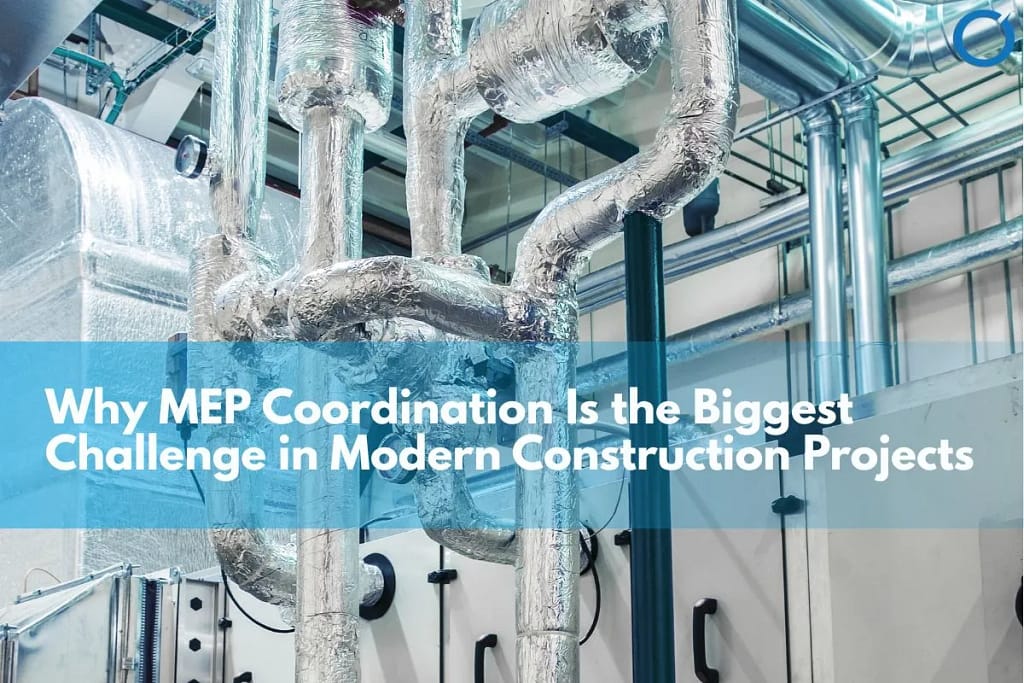
- Understanding the Role of MEP Coordination
- Why MEP Coordination Has Become More Challenging
- Impact of Poor MEP Coordination
- How Technology Is Addressing MEP Coordination Challenges
- Role of BIM in MEP Coordination
- Importance of Preconstruction in MEP Coordination
- Strategies to Improve MEP Coordination
- 5. Integration of Design and Execution
- MEP Coordination in Data Center Projects
- How Contractors Are Adapting in 2026
- Moving Toward Integrated Construction Workflows
- Building Efficient and Coordinated Projects
- Key Takeaways for MEP Coordination
- FAQs
MEP coordination challenges have become one of the most critical issues in modern construction projects. As buildings become more complex and system-intensive, the integration of mechanical, electrical, and plumbing systems requires precise planning, coordination, and execution.
Unlike traditional construction projects, modern developments such as commercial buildings, healthcare facilities, and data centers depend heavily on interconnected MEP systems. Any misalignment between these systems can lead to delays, rework, and increased project costs.
Understanding the Role of MEP Coordination
MEP coordination involves aligning all building systems within a shared environment to ensure they function efficiently without conflicts.
This includes:
- Routing of ducts, pipes, and cable trays
- Alignment with structural elements
- Ensuring accessibility for installation and maintenance
- Integration with architectural layouts
Effective coordination ensures that all systems work together seamlessly throughout the project lifecycle.
Why MEP Coordination Has Become More Challenging
1. Increasing Building Complexity
Modern construction projects involve:
- High-density MEP systems
- Advanced HVAC and electrical infrastructure
- Integration of smart technologies
This increases the need for precise coordination across multiple disciplines.
2. Limited Space for Installation
MEP systems must be installed within constrained spaces.
Challenges include:
- Overlapping service routes
- Limited clearance for maintenance
- Complex vertical and horizontal routing
Without proper planning, this leads to conflicts during installation.
3. Multiple Stakeholders Involved
MEP coordination requires collaboration between:
- Architects
- Structural engineers
- MEP engineers
- Contractors
Lack of coordination between these stakeholders often results in inconsistencies and delays.
4. Frequent Design Changes
Design modifications during the project lifecycle create additional challenges.
These changes impact:
- System layouts
- Routing paths
- Equipment placement
Without structured coordination, updates can lead to misalignment and rework.
5. High Dependency on Accuracy
Even minor errors in MEP coordination can cause:
- System clashes
- Installation issues
- Performance inefficiencies
This makes accuracy critical in every stage of the project.
Impact of Poor MEP Coordination
1. Increased Rework
Uncoordinated systems often result in clashes that require on-site corrections.
This leads to:
- Additional labor costs
- Project delays
- Disruption in workflow
2. Delays in Project Delivery
Coordination issues slow down installation and commissioning processes.
Delays can impact overall project timelines and client satisfaction.
3. Cost Overruns
Errors in coordination lead to:
- Material wastage
- Reinstallation costs
- Extended project timelines
4. Reduced System Efficiency
Improperly coordinated systems may not perform as intended, affecting building performance and operational efficiency.
How Technology Is Addressing MEP Coordination Challenges
Modern construction projects rely on digital tools to improve coordination.
Key Solutions Include
- 3D modeling for visualization
- Clash detection to identify conflicts
- Real-time collaboration tools
- Integrated workflows
Using MEP BIM services, project teams can detect and resolve issues before construction begins.
Role of BIM in MEP Coordination
Building Information Modeling (BIM) plays a critical role in managing complex MEP systems.
Benefits of BIM Coordination
- Early clash detection
- Improved visualization of systems
- Better communication across teams
- Accurate planning and execution
Adopting BIM coordination services helps reduce errors and improve project outcomes.
Importance of Preconstruction in MEP Coordination
Preconstruction is essential for identifying and resolving coordination challenges before construction begins.
Key Benefits
- Detailed planning of MEP systems
- Alignment with structural and architectural elements
- Identification of potential conflicts
- Improved cost estimation
Structured construction documentation services and planning workflows help ensure consistency and accuracy.
Strategies to Improve MEP Coordination
1. Early Collaboration
Engaging all stakeholders early in the project ensures better alignment and reduces coordination issues.
2. Use of Digital Models
3D modeling and BIM tools provide better visibility and help teams understand system layouts.
3. Standardized Workflows
Defining clear processes for coordination improves efficiency and reduces errors.
4. Continuous Coordination
Regular updates and coordination meetings ensure that all changes are aligned across teams.
5. Integration of Design and Execution
Aligning design and construction workflows improves overall project efficiency.
MEP Coordination in Data Center Projects
Data center construction highlights the importance of MEP coordination more than any other sector.
These projects involve:
- High-density electrical systems
- Advanced cooling infrastructure
- Strict performance requirements
Any coordination failure can impact system reliability and performance.
How Contractors Are Adapting in 2026
To address coordination challenges, contractors are adopting:
- Advanced BIM workflows
- Improved planning strategies
- Integrated project delivery models
- Data-driven decision-making
Many are also using specialized teams to handle complex MEP coordination requirements.
Moving Toward Integrated Construction Workflows
Modern construction projects require integrated workflows where design, coordination, and execution are aligned.
This includes:
- Better communication between teams
- Real-time updates
- Data-driven planning
Adopting integrated approaches helps improve efficiency and reduce risks.
Building Efficient and Coordinated Projects
As construction projects become more complex, the need for efficient MEP coordination continues to grow.
Contractors must focus on:
- Improving coordination accuracy
- Enhancing collaboration
- Using advanced tools and workflows
Those who adopt structured coordination strategies will be better positioned to deliver successful projects.
Key Takeaways for MEP Coordination
MEP coordination challenges are driven by increasing complexity, limited space, and the need for precision.
Effective coordination helps:
- Reduce rework
- Improve efficiency
- Ensure timely project delivery
If you’re looking to improve coordination and reduce project risks, adopting structured preconstruction and BIM workflows can significantly enhance project outcomes.
With 29+ years of group experience, Optimar Precon supports contractors with reliable preconstruction solutions, helping them manage complex MEP coordination with accuracy and efficiency.
FAQs
It is the process of aligning mechanical, electrical, and plumbing systems to avoid conflicts and ensure efficient installation.
It helps prevent clashes, reduce rework, and improve overall project efficiency.
Limited space, design changes, stakeholder coordination, and system complexity.
BIM enables visualization, clash detection, and better communication between teams.
By adopting BIM workflows, improving collaboration, and using structured planning processes.