
- Knowing What BIM Modeling Services Are
- How BIM Modeling Works in Construction Projects
- BIM Modeling Services Explained in Practical Terms
- Key Benefits of BIM Modeling for Construction Projects
- BIM Modeling for Preconstruction Planning
- BIM Coordination and Clash Detection
- Global BIM Standards That Guide BIM Modeling
- BIM Modeling vs Traditional Drafting
- BIM Tools Commonly Used by BIM Experts
- Who Uses BIM Modeling Services
- BIM Modeling Services for AEC Firms and Contractors
- Reducing Rework and Improving Accuracy with BIM
- BIM Modeling as a Long-Term Project Asset
- Building Smarter Construction Projects with Professional BIM Expertise
- FAQs
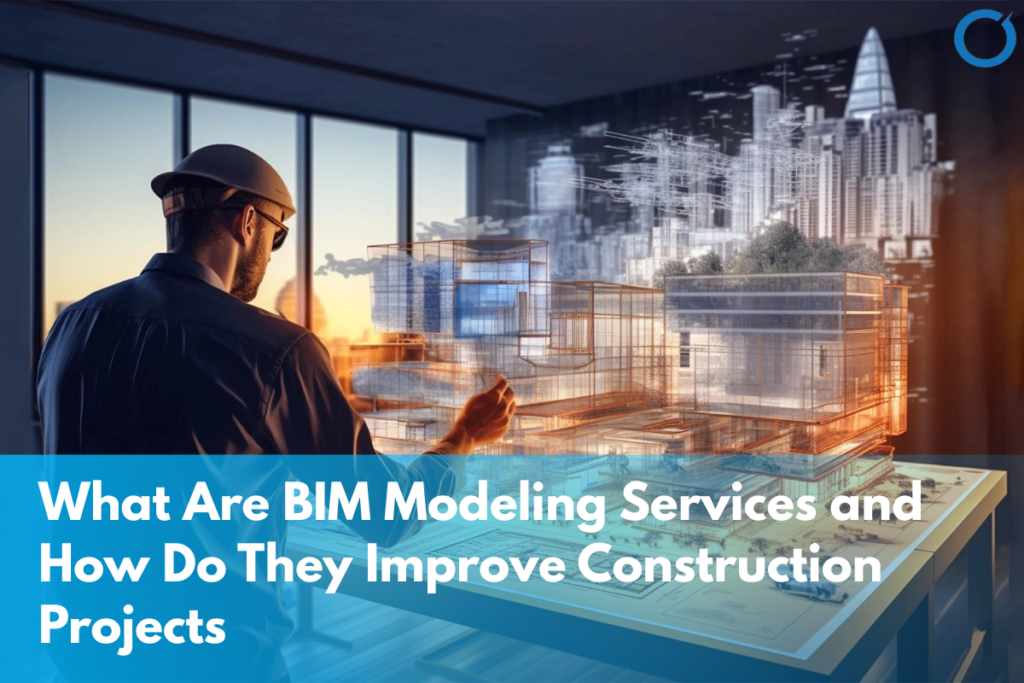
Globally, construction projects are becoming more complex, regulated, and time-constrained. The issue of managing coordination between design disciplines, contractors, and stakeholders has become a challenge for AEC firms. It is at this point that it becomes important to comprehend what BIM modeling services involve and how they assist in BIM modeling in construction projects.
BIM modeling has moved beyond its role as a design tool. Instead, it has evolved to become a basic process that aids in decision-making, planning, coordination, and risk management within the construction life cycle. Proper application of 3D BIM modeling within the construction industry enables BIM professionals to assist AEC firms in executing projects with increased confidence, accuracy, and efficiency.
Knowing What BIM Modeling Services Are
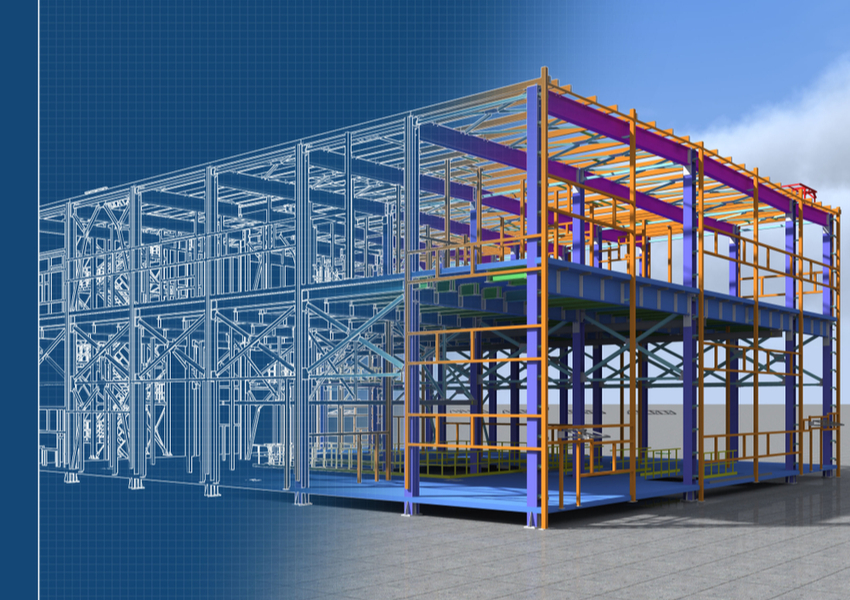
To fully understand what BIM modeling services are, it is important to look beyond 3D models. BIM modeling is the process of combining geometry with material information, quantities, requirements, and construction sequencing to create detailed digital representations of buildings or infrastructure. As a result, this forms the foundation of the BIM modeling process in the construction industry.
Architects, engineers, contractors, and consultants work together using consistent, organized data in a shared digital environment provided by BIM modeling services for AEC organizations. In contrast to traditional drafting, BIM enables project data to change as the design does, making BIM modeling in construction projects far more adaptable and accurate.
The following are typical BIM modeling services:
- Architectural, structural, and MEP modeling
- Model coordination across disciplines
- Data-driven quantity extraction
- Construction planning and sequencing support
As a result of this integrated approach, 3D BIM modeling in construction has become a fundamental component of modern AEC project delivery.
How BIM Modeling Works in Construction Projects
In construction projects, BIM modeling follows a structured workflow. Each discipline develops its own model using agreed standards and levels of detail. These models are then combined into a federated model for coordination and review, forming a critical stage of the BIM modeling process in construction.
A typical BIM workflow includes:
- Discipline-specific modeling
- Model coordination and clash detection
- Design reviews and revisions
- Model-based planning and analysis
Throughout the project lifecycle, this unified approach helps AEC teams communicate more effectively and reduce discrepancies.
BIM Modeling Services Explained in Practical Terms
To put it simply, BIM modeling services replace disjointed drawings with a single, trustworthy digital source of truth. All stakeholders operate from coordinated models that represent current project information rather than numerous disjointed files. This practical application of the BIM modeling process in construction reduces confusion and improves efficiency.
For AEC firms, this means:
- Fewer misunderstandings between disciplines
- Faster design validation
- Clearer communication with clients and contractors
When BIM modeling services are explained this way, the real-world value of 3D BIM modeling in construction becomes practical and measurable.
Key Benefits of BIM Modeling for Construction Projects
Early problem detection is one of the main advantages of BIM modeling for building. It is much less expensive to find problems during design or preconstruction than to fix them on the job site. This is especially true when BIM modeling in construction projects is introduced early.
Key benefits include:
- Improved coordination across architectural, structural, and MEP systems
- Reduced rework and site conflicts
- Better construction planning and sequencing
- More accurate quantities and scope clarity
These advantages highlight why 3D BIM modeling in construction is essential for large and complex AEC projects.
BIM Modeling for Preconstruction Planning
The majority of project risks start during preconstruction. Before construction starts, AEC companies can analyze constructability, sequencing, and cost implications using BIM modeling for preconstruction, which is a critical phase of the BIM modeling process in construction.
Using BIM during preconstruction supports:
- Model-based quantity takeoffs
- Constructability and logistics reviews
- Early clash detection
- Scenario testing for schedules and workflows
This data-driven use of BIM modeling in construction projects helps developers and contractors make informed decisions early.
BIM Coordination and Clash Detection
One of the most popular BIM applications is BIM coordination services. It guarantees that MEP, structural, and architectural systems cooperate harmoniously.
BIM coordination and clash detection help identify:
- Physical clashes between systems
- Clearance and access issues
- Design inconsistencies between disciplines
By resolving these digitally, AEC teams avoid costly rework and delays during construction.
Global BIM Standards That Guide BIM Modeling
BIM modeling adheres to accepted international standards to guarantee uniformity and dependability. These guidelines aid AEC companies in efficiently managing data across projects and geographical areas.
Some widely adopted BIM standards include:
- ISO 19650 – International standard for information management using BIM
- BS 1192 – Standard of UK origin that influenced contemporary BIM processes
- AEC BIM Protocols – AEC teams utilize useful frameworks for coordination
- LOD (Level of Development) guidelines – Define model detail and reliability at each stage
These standards ensure that BIM models are structured, accurate, and suitable for collaboration.
BIM Modeling vs Traditional Drafting
When BIM modeling is contrasted with traditional drafting, it becomes clear why BIM is now crucial for contemporary building.
Traditional drafting:
- Produces static 2D drawings
- Relies heavily on manual coordination
- Increases the risk of inconsistencies
BIM modeling:
- Creates intelligent, data-rich models
- Supports automated coordination
- Enables data-driven decision-making
For AEC firms, this shift represents a move from reactive problem-solving to proactive planning.
BIM Tools Commonly Used by BIM Experts
To produce precise and well-coordinated models, professional BIM specialists rely on industry-standard tools. Various BIM process steps are supported by these products.
Common BIM tools include:
- Autodesk Revit for discipline modeling
- Navisworks for coordination and clash detection services
- AutoCAD for supporting documentation
- BIM 360 / Autodesk Construction Cloud for collaboration
- Bluebeam for reviews and markups
When utilized appropriately, these tools support the preservation of quality and uniformity throughout AEC projects.
Who Uses BIM Modeling Services
The whole AEC sector makes use of BIM modeling services. Every stakeholder gains in a unique way.
Typical users include:
- Contractors planning execution and coordination
- Architects refining design intent
- Engineers coordinating structural and MEP systems
- Developers assessing feasibility and risk
Therefore, BIM acts as a unified platform that enables seamless collaboration across all AEC project participants.
BIM Modeling Services for AEC Firms and Contractors
This is why BIM modeling services assist AEC companies in bridging the gap between design and construction. Contractors use BIM to reduce RFIs, optimise sequencing, and increase bid accuracy.
Because of this, BIM modeling is a useful tool for time, money, and risk management.
Reducing Rework and Improving Accuracy with BIM
One of the biggest factors influencing building costs is rework. By enhancing collaboration and clarity early in the process, BIM modeling helps minimize rework.
With BIM, AEC teams can:
- Identify conflicts before construction
- Maintain consistent information across disciplines
- Improve confidence in construction documentation
As a result, this leads to smoother execution and more predictable outcomes.
BIM Modeling as a Long-Term Project Asset
BIM models help operations, maintenance, and upcoming improvements in addition to construction. Accurate models become long-term digital assets that extend project value beyond handover.
As a result, this turns BIM from a one-time output into a long-term investment for facility managers and owners.
Building Smarter Construction Projects with Professional BIM Expertise
Modern building requires an understanding of BIM modeling services, but proper application is what yields outcomes. Project outcomes are improved, coordination is strengthened, and risk is decreased when BIM is applied by qualified BIM specialists under defined standards and workflows.
At Optimar Precon, we support AEC firms and contractors with reliable BIM expertise across modeling, coordination, and preconstruction planning. With 29+ years of group experience, advanced BIM tools, and dedicated BIM professionals, we help project teams deliver construction-ready outputs with confidence, accuracy, and control.
FAQs
They involve creating coordinated digital models that integrate geometry and data to support planning, coordination, and construction.
BIM improves coordination, reduces errors, and supports better decision-making across AEC projects.
No. Projects of all sizes benefit from improved clarity and coordination.
ISO 19650, BS 1192, LOD frameworks, and AEC BIM protocols are commonly used.
Revit, Navisworks, AutoCAD, BIM 360, and Bluebeam are widely adopted.


