- What Are 2D Rendering Services
- What Are 3D Rendering Services
- 2D vs 3D Rendering Services: Core Differences
- When to Use 2D Rendering in Construction Projects
- When to Use 3D Rendering in Construction Projects
- Role of 3D Rendering in BIM Workflows
- Integration with CAD and Preconstruction Services
- How 3D Rendering Improves Project Outcomes
- Role of MEP and Structural Visualization
- Why Contractors Are Moving Toward 3D Rendering in 2026
- Why Offshore Rendering Services Are in Demand
- Common Mistakes to Avoid
- Pro Tips for Choosing the Right Rendering Approach
- How to Choose Between 2D and 3D Rendering
- Improve Project Visualization with the Right Rendering Approach
- FAQs
In short, 2D rendering produces flat technical drawings, floor plans, elevations, and layouts from CAD drawings. It is fast, cost-effective, and suitable for early design stages and simple projects. 3D rendering creates photorealistic or detailed three-dimensional visuals from BIM models or CAD geometry. It is essential for complex projects, client presentations, planning approvals, and BIM coordination workflows. In 2026, most commercial construction projects use both 2D for technical documentation and 3D for communication, approvals, and coordination.
2D vs 3D rendering services is a common decision point for contractors, architects, and developers planning modern construction projects. In 2026, visualization is no longer optional. It directly impacts design clarity, approvals, and project execution.
With the rise of digital workflows, many construction teams are moving from traditional 2D approaches to advanced 3d rendering services and bim 3d modeling services to improve communication and reduce project risks.
This blog explains the differences between 2D and 3D rendering, their applications, and how they connect with services like CAD drafting services, BIM modeling services, and construction documentation services to support better project outcomes.
What Are 2D Rendering Services
2D rendering refers to flat visual representations created using CAD tools.
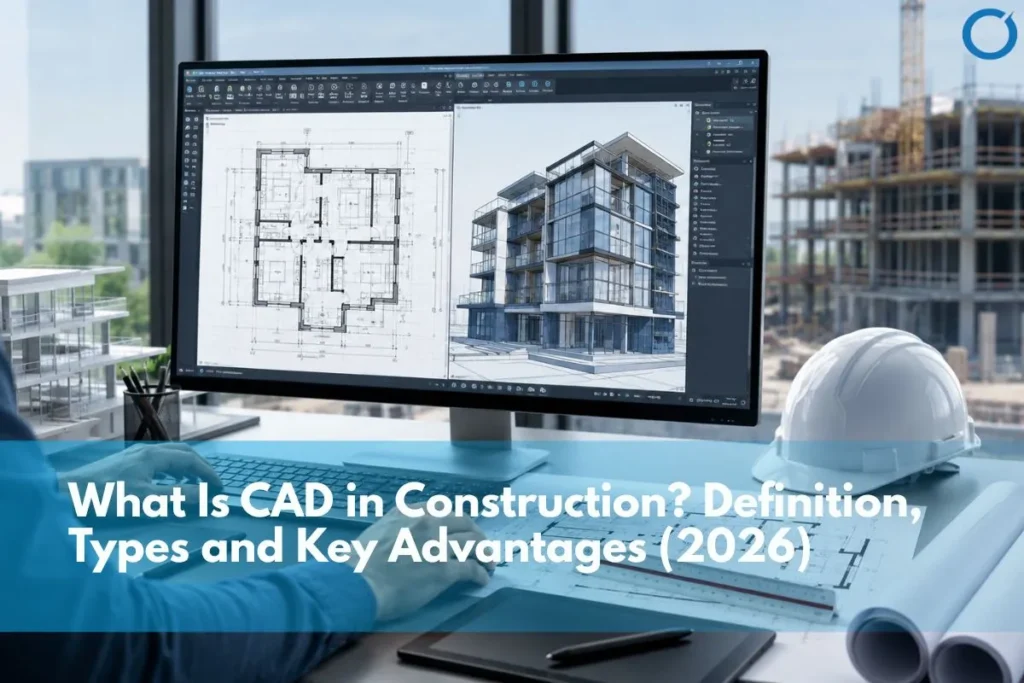
These are typically developed from CAD drawings, including autocad 2d drawing and 2D CAD drawing services, to represent layouts, elevations, and plans.
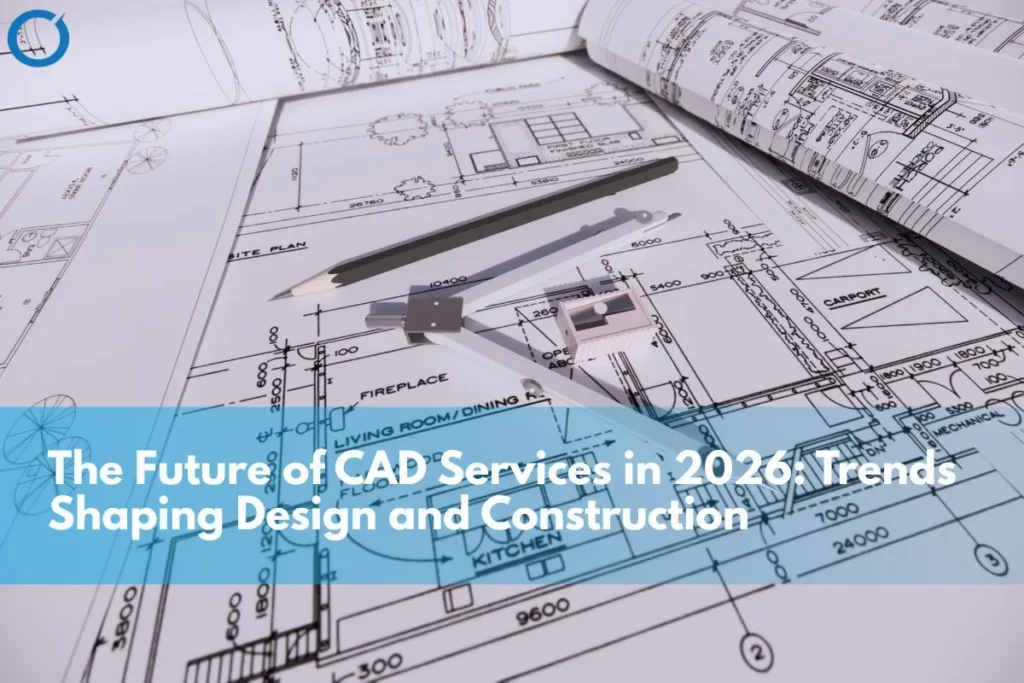
2D rendering produces flat visual representations of a building from CAD drawings, floor plans, elevations, sections, and layouts. It is produced using standard CAD tools such as AutoCAD and is the primary format for planning submissions, building regulations documentation, and contractor tender packages. 2D rendering is fast to produce, easy to revise, and universally readable by all project parties.
2D rendering is widely used in early design stages and basic project documentation.
What Are 3D Rendering Services
3D rendering creates realistic visual representations of buildings and spaces.
Using tools like Revit and advanced rendering engines, 3D rendering services convert models into detailed visuals that show depth, materials, lighting, and textures.
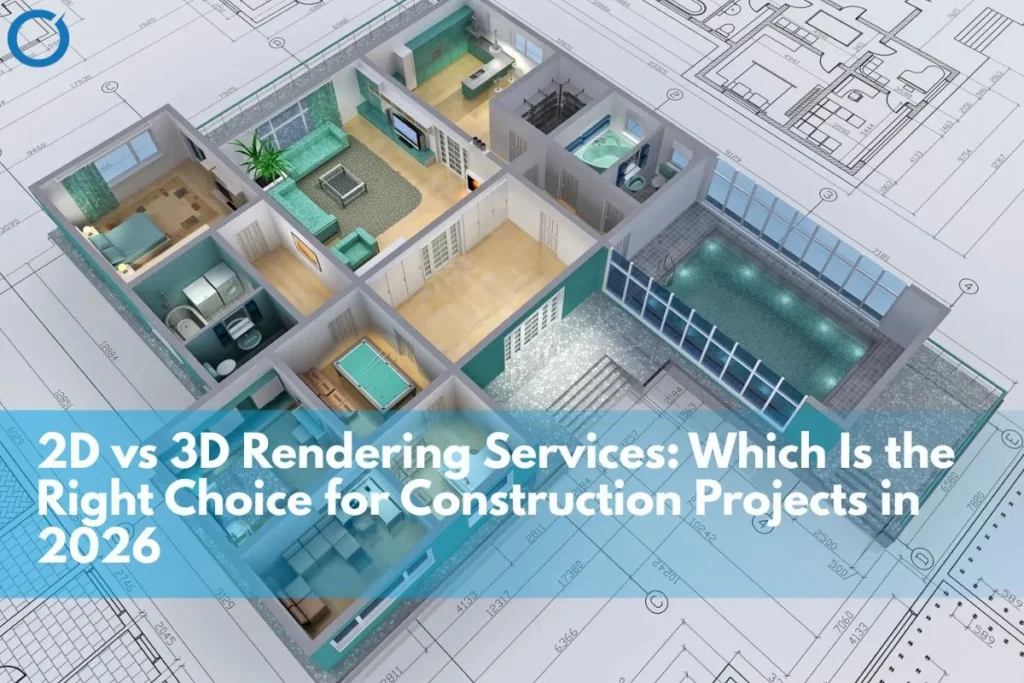
3D rendering creates realistic three-dimensional visual representations of a building, showing depth, materials, lighting, and spatial relationships. It is produced from BIM models or 3D CAD geometry using rendering engines such as Enscape, Lumion, or Twinmotion. 3D rendering is used for client presentations, planning authority submissions, marketing materials, and design validation, anywhere that flat 2D drawings cannot communicate the design intent clearly enough.
Types of rendering include 3d architectural rendering, 3d interior rendering, and 3D exterior rendering services.
2D vs 3D Rendering Services: Core Differences
Visualization Capability
2D rendering provides basic layouts, while 3D rendering offers detailed, realistic visuals.
3D models created through revit 3D modeling and 3D modeling and rendering help stakeholders clearly understand design intent.
Design Accuracy
2D drawings can sometimes lead to interpretation errors.
3D rendering, combined with BIM modeling services, improves accuracy by providing a complete view of the project.
Client Communication
2D drawings are often difficult for non-technical stakeholders to understand.
3D rendering makes it easier to present designs and get approvals faster.
Project Coordination
2D workflows rely heavily on manual coordination.
3D rendering integrates with BIM coordination services and explains how clash detection works, improving coordination across disciplines.
Cost and Time Consideration
2D rendering is quicker and less expensive initially.
3D rendering requires more time and expertise but reduces long-term costs by minimizing errors and rework.
When to Use 2D Rendering in Construction Projects
2D rendering is suitable for:
- Early design concepts
- Basic layouts and documentation
- Projects with limited complexity
- Supporting CAD drafting services workflows
It works well when detailed visualization is not required.
When to Use 3D Rendering in Construction Projects
3D rendering is ideal for:
- Complex projects with multiple systems
- Client presentations and approvals
- Projects requiring detailed visualization
- Integration with BIM services and revit modeling services
It is especially useful in commercial, residential, and infrastructure projects.
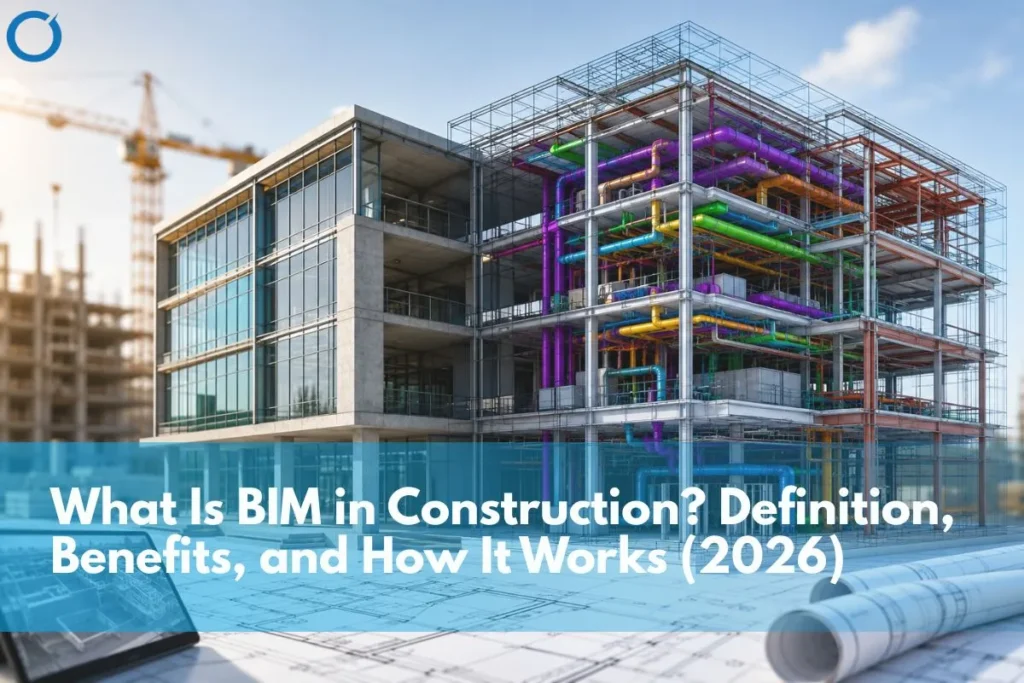
Role of 3D Rendering in BIM Workflows
3D rendering is closely linked with BIM services.
Models developed through building information modeling services are used to generate realistic visuals and support project planning.
Key Benefits
- Improved design validation
- Better coordination across teams
- Enhanced project visualization
- Integration with virtual design and construction services
This combination improves efficiency and reduces project risks. See our guide on what is BIM in construction
Integration with CAD and Preconstruction Services
Rendering services do not work in isolation. They connect with other preconstruction workflows.
CAD Drafting Services
2D rendering is based on CAD drawings, including architectural CAD drawings services and structural CAD drawings services.
These drawings form the foundation for 3D modeling. See our guide on what are CAD services
CAD to BIM Conversion
Projects often involve converting 2D drawings into 3D models using CAD to BIM services and CAD conversion services.
This ensures continuity between design stages.
Construction Takeoff Services
3D models support accurate quantity extraction for:
- What is quantity takeoff
- material takeoff services
- construction takeoff services
Construction Estimating Services
Rendering and modeling data help improve:
- construction estimating services
- building construction estimator workflows
- MEP estimating services
How 3D Rendering Improves Project Outcomes
3D rendering plays a critical role in improving construction outcomes.
Key Advantages
- Better visualization of design concepts
- Reduced design errors
- Improved coordination between disciplines
- Faster decision-making
- Enhanced stakeholder communication
These benefits contribute to more efficient and successful projects.
Role of MEP and Structural Visualization
Rendering is not limited to architectural design. It also supports MEP and structural workflows.
MEP Visualization
Using MEP BIM services and MEP coordination services, teams can visualize complex building systems.
Structural Visualization
With structural BIM services and revit structural modeling, structural elements can be accurately represented and analyzed.
Why Contractors Are Moving Toward 3D Rendering in 2026
The shift toward 3D rendering is driven by the need for better project control and efficiency.
The shift toward 3D rendering in commercial construction is driven by three factors. First, project complexity denser MEP systems, tighter tolerances, and multi-discipline coordination make 3D visualization essential for identifying conflicts before construction. Second, client expectations, developers, and end users increasingly expect to see and approve the design in three dimensions before committing. Third, BIM integration as BIM coordination becomes standard on commercial projects, 3D rendering is a natural output of the coordination model rather than a separate exercise.
This trend is expected to continue as digital construction evolves.
Why Offshore Rendering Services Are in Demand
Many companies are outsourcing rendering services to offshore teams.
Benefits
- Access to skilled professionals
- Cost-effective solutions
- Faster turnaround
- Scalable resources
Optimar Precon’s Capabilities
Optimar Precon provides:
- Advanced 3D rendering services
- Integration with BIM modeling services
- Support for revit modeling services
- Coordination with construction documentation services
This ensures high-quality outputs and efficient project execution.
Common Mistakes to Avoid
- Relying only on 2D CAD drawing services for complex projects
- Ignoring visualization during design stages
- Delaying BIM adoption
- Poor coordination between teams
- Not integrating rendering with estimation and takeoff
Avoiding these mistakes helps improve project efficiency.
Pro Tips for Choosing the Right Rendering Approach
- Use 2D rendering for basic and early-stage projects
- Adopt 3D rendering for complex and large-scale developments
- Integrate rendering with BIM and coordination workflows
- Work with experienced rendering and modeling teams
- Align rendering with project goals and timelines
How to Choose Between 2D and 3D Rendering
The choice depends on project requirements.
Choose 2D Rendering When
- The project is simple
- Budget is limited
- Visualization needs are minimal
Choose 3D Rendering When
- The project is complex
- Detailed visualization is required
- Coordination between systems is critical
- Stakeholder communication is important
Improve Project Visualization with the Right Rendering Approach
Choosing between 2D and 3D rendering services depends on your project requirements, complexity, and goals. While 2D rendering remains useful for basic workflows, 3D rendering is becoming essential for modern construction projects.
If you want to improve visualization, reduce errors, and enhance coordination, adopting advanced rendering solutions can make a significant difference.
Connect with Optimar Precon to explore how rendering and modeling services can support your projects with better accuracy and efficiency.
FAQs
Ans: 2D rendering provides flat drawings, while 3D rendering creates realistic visual representations of projects.
Ans: It is not mandatory for all projects but is highly beneficial for complex and large-scale developments.
Ans: It provides detailed visualization, helping identify design issues early and reducing errors.
Ans: Yes, 3D rendering works closely with BIM modeling services to improve coordination and planning.
Ans: Offshore teams provide cost-effective, skilled resources and faster project delivery.