- Why Accuracy Matters in Construction Projects
- What Are CAD Drafting Services
- How CAD Drafting Services Improve Accuracy
- Role of CAD Drafting in Preconstruction
- Reducing Errors Through Digital Workflows
- How CAD Drafting Improves Quality Control in Construction
- CAD Drafting vs Traditional Drafting
- Challenges in Maintaining Accuracy (And How CAD Solves Them)
- How CAD Drafting Supports Execution on Site
- When Should You Use CAD Drafting Services
- Benefits of Outsourcing CAD Drafting Services
- How to Ensure Accuracy When Working with CAD Drafting Teams
- How Optimar Precon Supports Accurate CAD Drafting
- Improve Project Accuracy with Structured CAD Workflows
- FAQs
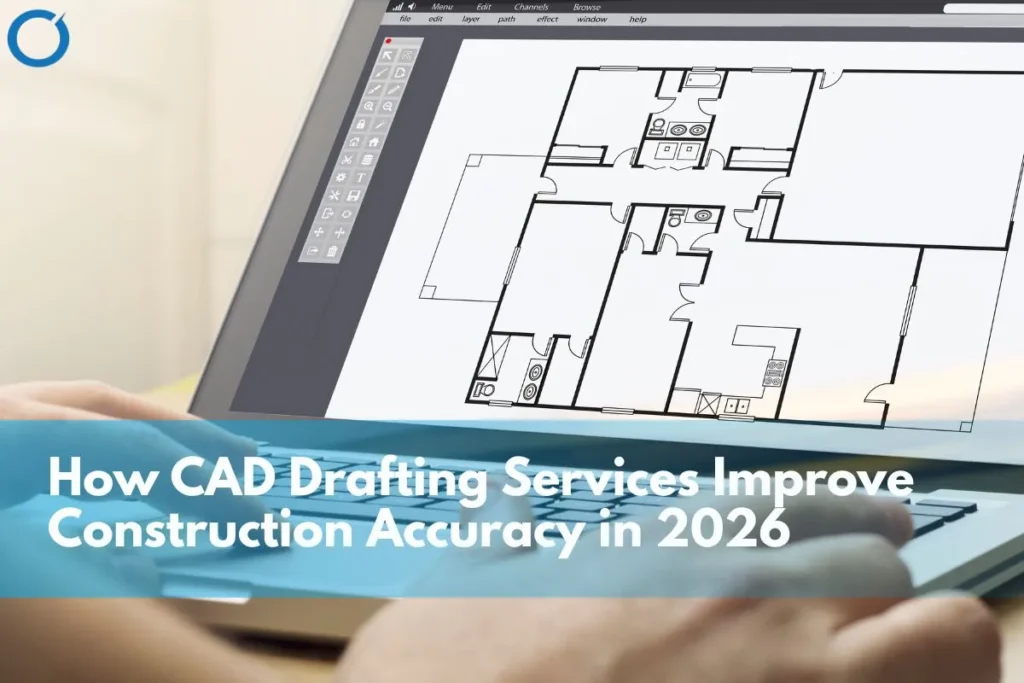
How CAD drafting services improve construction accuracy in 2026 is a key consideration for contractors, architects, and engineers working on increasingly complex projects. As construction demands higher precision and faster delivery, relying on manual drawings or outdated workflows can lead to costly errors and delays.
Modern CAD drafting services provide structured, detailed, and highly accurate drawings that serve as the foundation for successful project execution. When combined with advanced workflows like building information modeling services, CAD drafting becomes even more powerful in improving coordination and reducing risks.
Why Accuracy Matters in Construction Projects
Accuracy is critical at every stage of a construction project. Even small errors in drawings can lead to:
- Rework and delays
- Increased project costs
- Material wastage
- Coordination conflicts
Accurate drafting ensures that all stakeholders are working with the same information, reducing confusion and improving efficiency.
What Are CAD Drafting Services
CAD drafting services involve creating detailed technical drawings using specialized software to represent construction designs accurately.
These services include:
- 2D CAD drawings
- 3D CAD modeling
- Shop drawings
- As-built drawings
- Redline and revision updates
CAD drafting provides clarity and precision, ensuring that design intent is translated correctly into construction.
How CAD Drafting Services Improve Accuracy
1. Precise and Detailed Drawings
CAD drafting eliminates ambiguity by providing highly detailed and dimensionally accurate drawings.
This helps:
- Reduce interpretation errors
- Ensure proper execution on-site
- Maintain design consistency
2. Standardization Across Projects
Standardized templates and drafting practices ensure consistency across all project drawings.
Benefits include:
- Uniform documentation
- Easier collaboration
- Reduced errors during revisions
3. Improved Coordination Between Disciplines
One of the biggest causes of errors in construction is poor coordination.
By aligning CAD drawings with BIM coordination services, teams can:
- Identify conflicts early
- Improve communication
- Reduce rework
4. Faster and More Accurate Revisions
Construction projects often require frequent changes. CAD drafting allows quick and accurate updates without affecting the entire drawing set.
This results in:
- Reduced delays
- Better version control
- Improved workflow efficiency
5. Integration with Estimation and Planning
CAD drawings are increasingly used for estimation and planning purposes.
By integrating with quantity takeoff services, teams can:
- Extract accurate quantities
- Improve budgeting
- Reduce cost overruns
Role of CAD Drafting in Preconstruction
During preconstruction, CAD drafting plays a crucial role in planning and analysis.
Key contributions include:
- Supporting design validation
- Enhancing project visualization
- Improving estimation accuracy
- Assisting in scheduling
Accurate drafting at this stage reduces risks and ensures smoother execution.
Reducing Errors Through Digital Workflows
Digital CAD workflows significantly reduce human errors compared to manual drafting.
Key advantages:
- Automated calculations and measurements
- Error detection during drafting
- Real-time updates and revisions
- Better document management
These features help maintain accuracy throughout the project lifecycle, especially when supported by structured CAD conversion services for handling legacy drawings and updates efficiently.
How CAD Drafting Improves Quality Control in Construction
Quality control is a critical factor in construction, and CAD drafting plays a major role in maintaining consistency and accuracy across project deliverables.
With structured CAD workflows, teams can implement multiple layers of checks during the drafting process. This ensures that errors are identified early and corrected before they impact construction.
CAD improves quality control by:
- Maintaining standardized drawing formats and templates
- Ensuring consistent dimensions and annotations
- Enabling easier review and approval processes
- Supporting version control and revision tracking
When aligned with workflows like shop drawing services, CAD drafting helps ensure that all project components are clearly detailed for accurate execution.
This structured approach minimizes errors, improves drawing reliability, and supports better construction outcomes.
CAD Drafting vs Traditional Drafting
Traditional drafting methods rely heavily on manual processes, which increase the chances of errors.
CAD drafting offers:
- Higher precision
- Faster turnaround
- Better scalability
- Improved collaboration
This shift from manual to digital drafting has transformed construction accuracy.
Challenges in Maintaining Accuracy (And How CAD Solves Them)
Despite technological advancements, maintaining accuracy can still be challenging.
Common challenges:
- Frequent design changes
- Multiple stakeholders
- Large drawing sets
- Coordination issues
How CAD solves them:
- Structured documentation
- Standardized workflows
- Integration with building information modeling services
- Better version control
How CAD Drafting Supports Execution on Site
Accurate CAD drawings directly impact construction execution.
They help with:
- Clear instructions for contractors
- Accurate installation of components
- Reduced on-site confusion
- Faster decision-making
This ensures that construction aligns with design intent.
When Should You Use CAD Drafting Services
CAD drafting services are essential in various scenarios.
You should use them when:
- Starting a new construction project
- Updating existing designs
- Preparing detailed construction drawings using 2D CAD drawing services
- Coordinating between teams
- Managing large-scale projects
Using CAD drafting at the right stage improves accuracy and efficiency.
Benefits of Outsourcing CAD Drafting Services
Many companies outsource CAD drafting to improve efficiency and accuracy.
Key benefits include:
- Access to experienced professionals
- Faster turnaround times
- Cost-effective solutions
- Consistent quality across drawings
- Scalability for large projects
Outsourcing ensures high-quality output without increasing internal workload.
How to Ensure Accuracy When Working with CAD Drafting Teams
Even with advanced tools, achieving accuracy depends on how CAD drafting workflows are managed and executed.
Best practices to ensure accuracy include:
- Clearly defining project requirements and standards
- Maintaining consistent communication between teams
- Reviewing drawings at each stage of development
- Using standardized templates and naming conventions
- Aligning drafting with estimation and planning workflows
Collaborating with teams that can support workflows like Revit modeling services further improves accuracy by enhancing model-based coordination and visualization.
A structured and disciplined approach not only reduces errors but also improves coordination, enhances drawing reliability, and supports smoother project execution.
How Optimar Precon Supports Accurate CAD Drafting
Optimar Precon supports contractors, architects, and engineers with reliable CAD drafting solutions tailored to project needs.
Our capabilities include:
- Professional CAD drafting services across disciplines
- Detailed architectural, structural, and MEP drawings
- Integration with BIM Services
- Alignment with estimation and planning workflows
Our approach focuses on precision, consistency, and coordination to improve project outcomes.
Improve Project Accuracy with Structured CAD Workflows
Accuracy in construction is not just about design it depends on how effectively drawings are created, managed, and executed.
CAD drafting services play a crucial role in:
- Reducing errors
- Improving coordination
- Enhancing efficiency
- Supporting better decision-making
As projects continue to grow in complexity, adopting structured CAD workflows becomes essential for delivering consistent and reliable results.
FAQs
Ans1. CAD drafting services improve accuracy by creating precise, standardized drawings that reduce errors, ensure consistency, and support better coordination across project teams.
Ans2. Accuracy ensures that construction is executed as per design, reducing rework, material waste, and costly delays during project execution.
Ans3. Yes, accurate CAD drawings minimize errors and rework, which helps control costs, optimize material usage, and improve overall budgeting.
Ans4. CAD drafting provides clear and detailed drawings that help architects, engineers, and contractors work with consistent information, improving collaboration and reducing conflicts.
Ans5. CAD drafting is used in residential, commercial, industrial, and infrastructure projects where accurate drawings and documentation are essential.
Ans6. CAD focuses on creating technical drawings, while BIM involves data-rich 3D models that support coordination and lifecycle management.
Ans7. Companies should outsource when they need faster turnaround, specialized expertise, scalability, or support for large and complex projects.
Ans8. Accuracy depends on standardized processes, quality checks, clear communication, and integration with planning and estimation workflows.