- What Does BIM Beyond Design Really Mean
- Role of BIM in Preconstruction
- Improving Estimation and Quantity Takeoffs with BIM
- Enhancing Coordination with BIM Workflows
- BIM in Construction Execution
- Integration of BIM with CAD and Legacy Data
- BIM for Risk Reduction and Decision-Making
- BIM and Data-Driven Decision Making in 2026
- BIM in Facility Management and Operations
- Why BIM Is Critical for Modern Construction Projects
- Why Companies Are Adopting BIM Beyond Design
- When Should You Implement BIM Beyond Design
- How Optimar Precon Supports BIM Across Project Lifecycle
- Build Smarter Projects with BIM Beyond Design
- FAQs
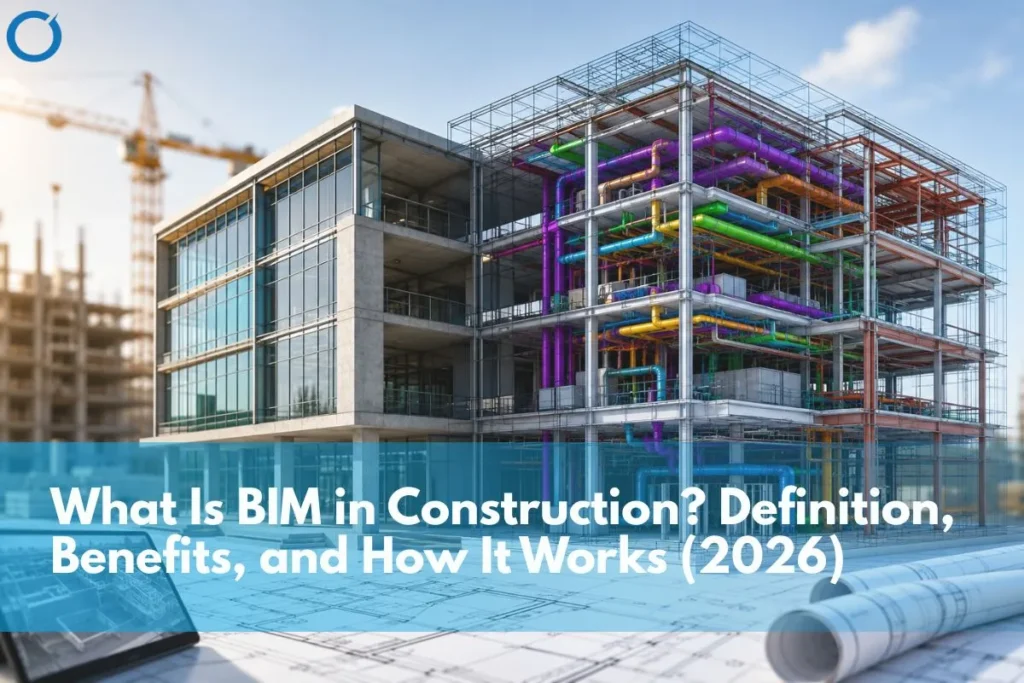
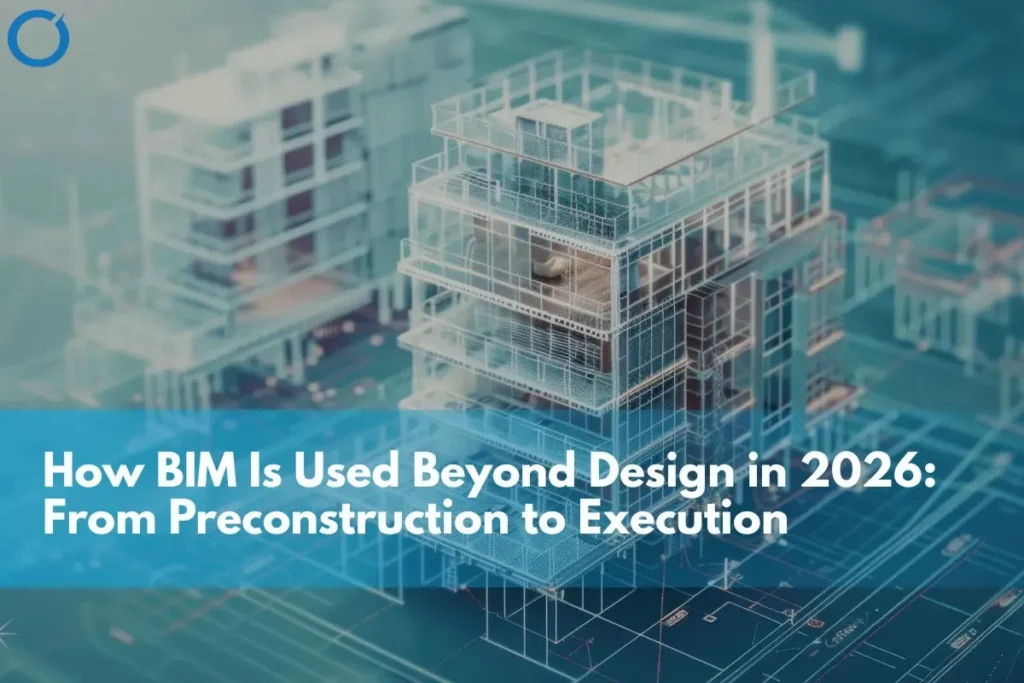
How BIM is used beyond design in 2026 has become a key topic in the construction industry as projects grow more complex and demand higher accuracy. Building Information Modeling (BIM) is no longer limited to creating 3D designs—it now plays a critical role across the entire project lifecycle, from early planning to on-site execution.
Today, construction companies rely on advanced BIM Services to improve coordination, reduce risks, and enhance decision-making. BIM has evolved into a powerful tool that connects design, estimation, planning, and construction into a unified workflow.
What Does BIM Beyond Design Really Mean
Traditionally, BIM was associated with visualization and design development. However, in 2026, BIM extends far beyond that.
BIM now supports:
- Preconstruction planning
- Quantity takeoffs and estimation
- Clash detection and coordination
- Construction sequencing
- Facility management
This transformation has made BIM a central part of modern construction workflows.
Role of BIM in Preconstruction
Preconstruction is where BIM delivers some of the highest value.
Using BIM during this phase allows teams to:
- Analyze designs before construction begins
- Identify clashes early
- Improve cost estimation accuracy
- Plan construction workflows
With the help of BIM modeling Services, contractors can visualize the entire project before execution, reducing uncertainty and improving planning.
Improving Estimation and Quantity Takeoffs with BIM
BIM has significantly improved the accuracy of material estimation.
Instead of relying on manual calculations, teams now use BIM-integrated workflows along with quantity takeoff services to extract precise quantities directly from models.
Benefits include:
- Accurate material quantities
- Reduced waste
- Better cost control
- Faster estimation processes
This helps contractors make informed financial decisions early in the project.
Enhancing Coordination with BIM Workflows
Coordination is one of the biggest challenges in construction, especially in complex projects like data centers, hospitals, and commercial buildings.
BIM enables seamless coordination using:
- BIM Coordination Services
- Clash Detection Services
This results in:
- Early detection of conflicts
- Improved collaboration between disciplines
- Reduced rework during construction
BIM in Construction Execution
BIM is now actively used during the execution phase, not just planning.
Key applications include:
- Construction sequencing (4D BIM)
- Cost tracking (5D BIM)
- Site coordination and planning
- Real-time updates and monitoring
Using advanced workflows like Revit modeling services, teams can ensure that execution aligns with design intent.
Integration of BIM with CAD and Legacy Data
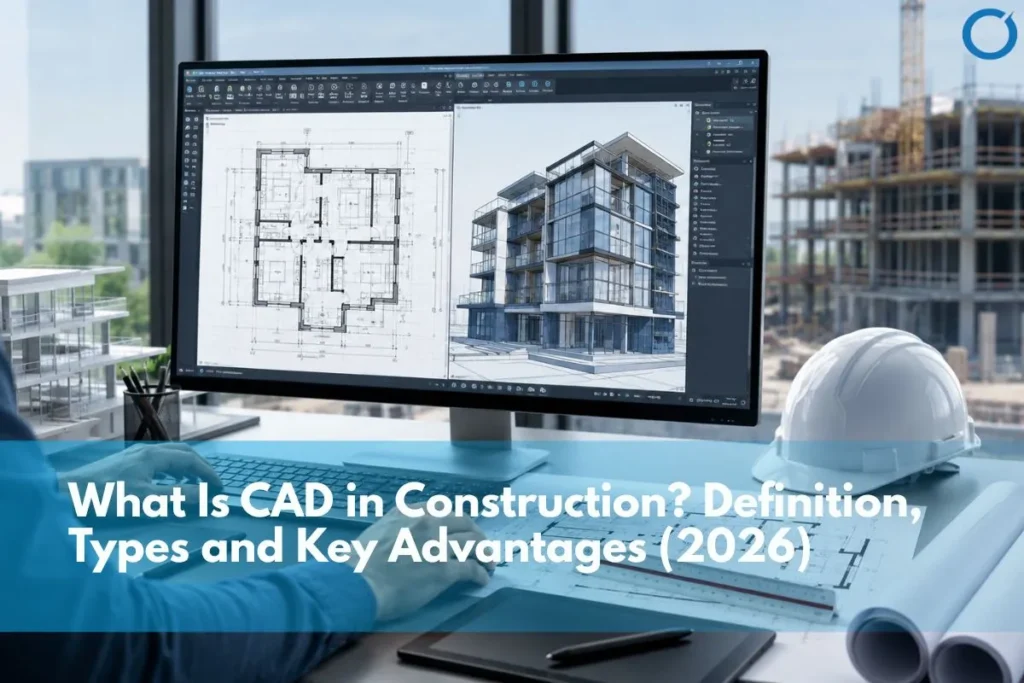
Many projects still begin with 2D drawings, which need to be converted into BIM models.
Through CAD to BIM Services, teams can:
- Convert 2D drawings into intelligent models
- Improve coordination
- Enhance project visualization
Additionally, CAD drafting services support accurate documentation and alignment across disciplines.
BIM for Risk Reduction and Decision-Making
One of the most important roles of BIM beyond design is risk management.
BIM helps identify:
- Design conflicts
- Cost uncertainties
- Scheduling issues
- Coordination gaps
With better visibility and data, decision-makers can act proactively rather than reactively.
BIM and Data-Driven Decision Making in 2026
In 2026, BIM is no longer just a modeling tool it has become a data-driven decision platform. Modern BIM workflows integrate real-time data, analytics, and project insights to support better planning and execution.
With BIM-enabled data, project teams can:
- Analyze project performance in real time
- Identify inefficiencies before they impact timelines
- Improve forecasting and resource allocation
- Make faster, more informed decisions
This shift allows construction professionals to move from reactive problem-solving to proactive project management. By combining BIM with structured workflows, companies can improve overall project predictability and reduce uncertainties.
BIM in Facility Management and Operations
BIM continues to deliver value even after construction is completed.
Post-construction applications include:
- Facility management
- Maintenance planning
- Asset tracking
- Lifecycle management
This makes BIM a long-term investment rather than a one-time tool.
Why BIM Is Critical for Modern Construction Projects
In 2026, construction projects demand:
- Faster delivery
- Higher accuracy
- Better coordination
- Reduced costs
BIM enables all of this by creating a unified digital environment where all stakeholders can collaborate effectively.
Why Companies Are Adopting BIM Beyond Design
The shift toward BIM beyond design is driven by the need for efficiency and scalability.
Key reasons include:
- Improved project accuracy
- Faster decision-making
- Better coordination
- Reduced operational costs
- Enhanced project visibility
Many companies are also integrating BIM workflows with construction estimating services to improve cost planning and budgeting.
When Should You Implement BIM Beyond Design
Many companies still limit BIM to the design phase, missing out on its full potential. To maximize value, BIM should be implemented from the earliest stages of a project.
You should adopt BIM beyond design when:
- Your projects involve multiple disciplines and complex coordination
- You need higher accuracy in estimation and planning
- You are working on tight schedules and deadlines
- Your team struggles with coordination and rework
- You want better visibility across the project lifecycle
Implementing BIM early ensures that all stakeholders work with consistent data, leading to better collaboration, reduced errors, and more efficient project delivery.
How Optimar Precon Supports BIM Across Project Lifecycle
Optimar Precon helps contractors, architects, and developers leverage BIM beyond design with structured and scalable solutions.
Our expertise includes:
- Advanced BIM Services
- Accurate modeling through Point Cloud to BIM Services
- End-to-end execution via scan to BIM services
- Seamless integration across preconstruction and execution
We help you improve coordination, reduce risks, and deliver projects efficiently.
Build Smarter Projects with BIM Beyond Design
BIM is no longer just a design tool it is a complete project management solution.
From preconstruction planning to on-site execution and facility management, BIM plays a critical role in improving efficiency and accuracy across all stages.
If you are looking to optimize workflows, reduce project risks, and improve coordination, adopting BIM beyond design is the way forward.
Get a Quote or Talk to a BIM Expert at Optimar Precon to enhance your project outcomes.
FAQs
Ans1. It refers to using BIM across preconstruction, estimation, coordination, execution, and facility management.
Ans2. It improves planning, coordination, and cost estimation before construction begins.
Ans3. Yes, BIM supports execution through sequencing, cost tracking, and site coordination.
Ans4. BIM enables accurate quantity extraction and better budgeting.
Ans5. It improves efficiency, reduces risks, and supports integrated construction workflows.