
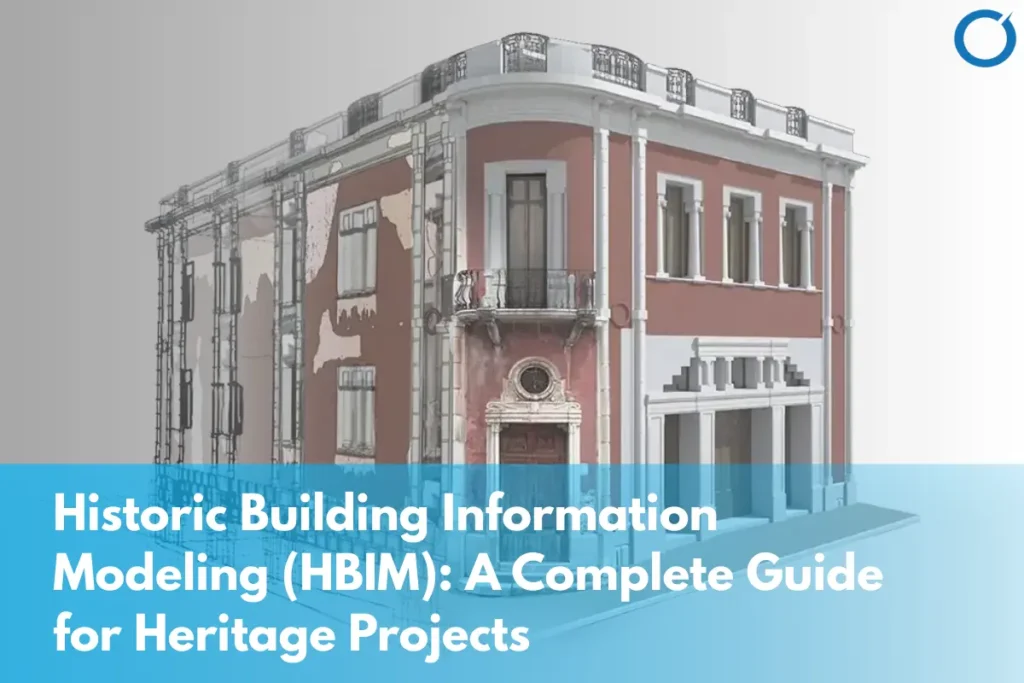
- What Is Historic Building Information Modeling (HBIM)
- Why HBIM Is Critical for Heritage and Historic Buildings
- HBIM vs Traditional BIM: Key Differences
- HBIM Workflow: From Survey to Intelligent Digital Model
- Level of Detail (LOD) in HBIM Projects
- Common Challenges in HBIM Modeling
- HBIM for Restoration, Renovation, and Adaptive Reuse
- Documentation Accuracy and Asset Management with HBIM
- Why Outsourcing HBIM Services Is a Strategic Choice
- HBIM Expertise Backed by Proven Experience
- Build Confidence in Your Heritage Projects
- FAQs
Historic buildings are a representation of cultural, architectural, and historical importance that cannot be replicated. It is necessary to retain this importance while designing the restoration, renovation, or repurposing of historic buildings. This is much more accurate than the traditional documentation process. Historic Building Information Modeling (HBIM) is a successful digital approach for heritage projects.
HBIM integrates advanced surveying tools with intelligent modeling to provide an accurate digital model of the existing structure. Currently, BIM in historic buildings is in widespread use by architects, conservation consultants, engineers, and building owners who need accurate information to support their heritage projects.
What Is Historic Building Information Modeling (HBIM)
Historic Building Information Modeling is a specialized BIM process created specifically for heritage buildings. Unlike traditional, design-oriented BIM, HBIM modeling relies on real-world data to create accurate digital models of existing structures.
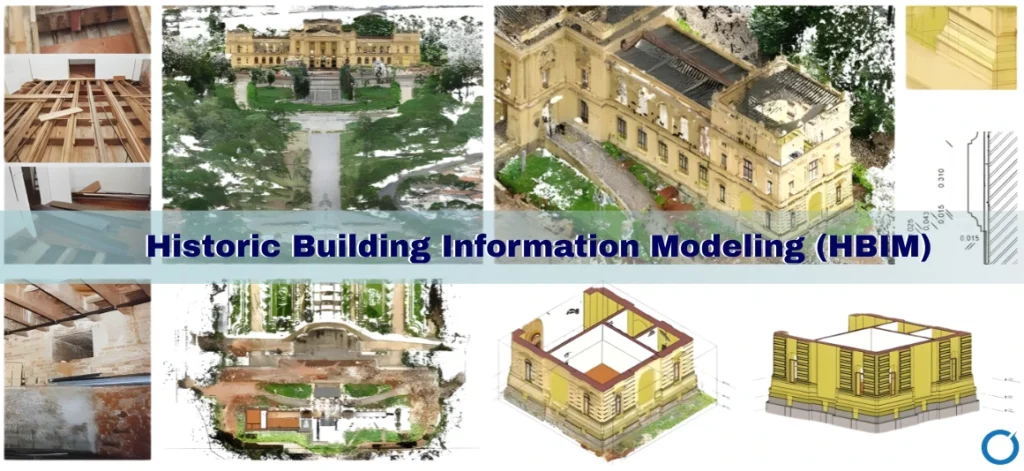
Using laser scanning, photogrammetry, site surveys, and archival records, HBIM creates intelligent digital models that reflect true geometry, materials, and construction logic. These models form the foundation of heritage BIM workflows used for conservation, restoration, and long-term asset management.
Why HBIM Is Critical for Heritage and Historic Buildings
Historic buildings are likely to have irregular geometries, undocumented changes, and aged materials. The use of 2D plans or guesswork can lead to inaccuracies and the loss of heritage.
The application of BIM services to historic buildings allows the following:
- Accurate digital representation of the existing building
- Improved understanding of complex architectural elements
- Early detection of coordination and structural problems
- Common data environment for collaborative working
Effective HBIM services enable informed decision-making without compromising the heritage of the building.
HBIM vs Traditional BIM: Key Differences
Although HBIM and traditional BIM rely on the same platforms, their goals differ significantly.
Traditional BIM focuses on new-build projects and design intent, while heritage BIM concentrates on documenting existing conditions, interpreting historic fabric, and supporting preservation planning.
The main points of difference are:
- HBIM modeling relies on reality capture instead of idealized geometry
- Models reflect irregular and non-parametric historical elements
- Strong emphasis on documentation and historical accuracy
- Broader use in conservation and asset management rather than construction alone
These differences make HBIM essential when working with historic and heritage assets.
HBIM Workflow: From Survey to Intelligent Digital Model
A structured workflow ensures reliable results throughout an HBIM project.
Site Survey and Reality Capture
The process starts with laser scanning or photogrammetry to obtain site information. This step is very important for BIM for historic buildings, as geometry cannot be assumed.
Point Cloud Processing
Captured data is processed and aligned to form a precise reference for modeling.
HBIM Modeling
During this phase, architectural and structural elements are modeled based on actual conditions using professional BIM Modeling Services. HBIM modeling ensures accuracy while accommodating irregular historic geometry.
Validation and Documentation
The model is validated against site data and historical references, creating a reliable digital record that supports HBIM services throughout the building lifecycle.
Level of Detail (LOD) in HBIM Projects
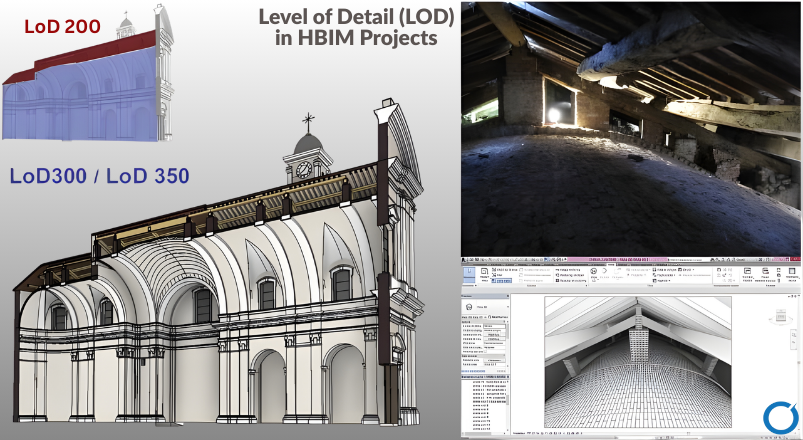
Defining the right Level of Detail is essential in heritage BIM projects. Not every element requires the same level of modeling depth.
Higher LOD is typically applied to:
- Decorative architectural elements
- Structural components under assessment
- Areas undergoing restoration or adaptive reuse
Strategic BIM LOD planning ensures that HBIM services remain cost-effective while maintaining model accuracy.
Common Challenges in HBIM Modeling
HBIM projects introduce complexities not seen in standard BIM workflows.
Common challenges include:
- Irregular historic geometry
- Incomplete archival records
- Large volumes of scan data
- Coordination across multiple disciplines
Experienced teams providing HBIM modeling solutions understand how to achieve this balance.
HBIM for Restoration, Renovation, and Adaptive Reuse
One of the most effective uses of BIM for historic buildings is in restoration and adaptive reuse projects. HBIM provides a reliable digital baseline that allows teams to plan restoration work with minimal disruption to the historic building.
Typical use cases include:
- Architectural restoration planning
- Structural analysis and retrofitting
- Adaptive reuse for modern occupancy
- Long-term maintenance planning
In each scenario, heritage BIM supports informed decision-making and reduces risk.
Documentation Accuracy and Asset Management with HBIM
Conventional documentation techniques cannot effectively represent the actual status of historical buildings. HBIM services overcome this problem by providing a centralized and detailed digital representation supported by professional Architectural BIM Services.
HBIM improves:
- Accuracy of heritage documentation
- Tracking of changes over time
- Lifecycle asset management
- Facility and maintenance planning
This makes HBIM modeling valuable long after construction or restoration is complete.
Why Outsourcing HBIM Services Is a Strategic Choice
HBIM involves specialized knowledge, tools, and practices that are not typically in-house for most organizations. Outsourcing HBIM services allows access to skilled personnel without incurring long-term costs.
Benefits include:
- Specialized knowledge in heritage BIM
- Scalable modeling support
- Faster delivery with consistent accuracy
- Reduced risk on complex heritage projects
HBIM Expertise Backed by Proven Experience
Successful HBIM modeling requires both technical capability and heritage domain knowledge. With 29+ years of group experience in preconstruction and digital delivery, Optimar Precon provides heritage projects with precise BIM workflows designed for historic properties.
Our BIM experience for historic buildings ensures models that honor architectural heritage and satisfy contemporary project needs.
Build Confidence in Your Heritage Projects
Historic Building Information Modeling has emerged as a critical tool for handling complex heritage resources. Whether it is documentation or restoration and subsequent management of the heritage resource, HBIM services give you clarity and control throughout.
If you are embarking on a heritage, restoration, or adaptive reuse project, heritage BIM provides you with the digital platform required for informed decision-making.
Take a look at the HBIM and BIM services offered by Optimar Precon to help you with your heritage projects.
FAQs
HBIM supports the digital documentation, analysis, restoration, and management of historic and heritage buildings using accurate, data-rich BIM models.
HBIM assists in heritage projects by offering accurate documentation, enhanced coordination, the ability to make informed conservation choices, and maintaining historical integrity throughout the heritage project life cycle.
Yes, HBIM modeling is very appropriate for restoration and renovation projects because it provides an accurate representation of existing conditions and facilitates informed planning with less effect on the historic fabric.
HBIM models are created using laser scans, point cloud data, site surveys, photographs, and available historical drawings to accurately represent existing building conditions.
Yes, HBIM provides a reliable digital record that supports long-term facility management, maintenance, and renovation planning.
Get Your Instant Quote

