
- Why Risk Reduction Requires Preconstruction Planning
- The Role of BIM Services in Preconstruction Planning
- BIM Modeling for Preconstruction Accuracy
- BIM Coordination for Preconstruction Risk Control
- How BIM Services Reduce Project Risk
- BIM Services for Contractors in Preconstruction
- BIM Coordination Before Construction Begins
- Using BIM for Preconstruction Risk Management
- BIM Services in Construction Planning and Decision Making
- How BIM Services Support Long-Term Project Outcomes
- Aligning BIM Services With Risk-Aware Preconstruction Planning
- FAQs
Long before work starts on the construction site, preconstruction decisions determine whether a project will succeed or fail. Early planning stages are frequently the source of cost overruns, coordination problems, design disagreements, and schedule delays. For contractors, developers, and design teams seeking to lower uncertainty and manage risk, BIM services for preconstruction have become crucial.
Throughout the preconstruction stage, BIM helps teams to plan projects with more confidence, precision, and control by enhancing visibility, coordination, and data-driven decision-making.
Why Risk Reduction Requires Preconstruction Planning
Before building begins, preconstruction planning combines design, cost, scheduling, and constructability issues. Inadequate preparation raises the risk of:
- Design clashes discovered too late
- Inaccurate quantities and cost assumptions
- Scheduling conflicts between trades
- RFIs and rework during construction
Early detection and resolution of these problems are key components of effective preconstruction risk management. Before design choices have an impact on site execution, BIM offers the tools and workflows required to assess design choices, test constructability, and coordinate disciplines.
The Role of BIM Services in Preconstruction Planning
Teams may go beyond disjointed drawings and spreadsheets using BIM services for preconstruction planning. Rather, they use coordinated digital models that incorporate project data, systems, and geometry.
Key ways BIM supports preconstruction include:
- Centralised project information
- Coordination of early stages across disciplines
- Visual validation of design intent
- Making decisions based on data
Before making construction commitments, teams can better understand scope, hazards, and restrictions by utilising BIM services early on.
BIM Modeling for Preconstruction Accuracy
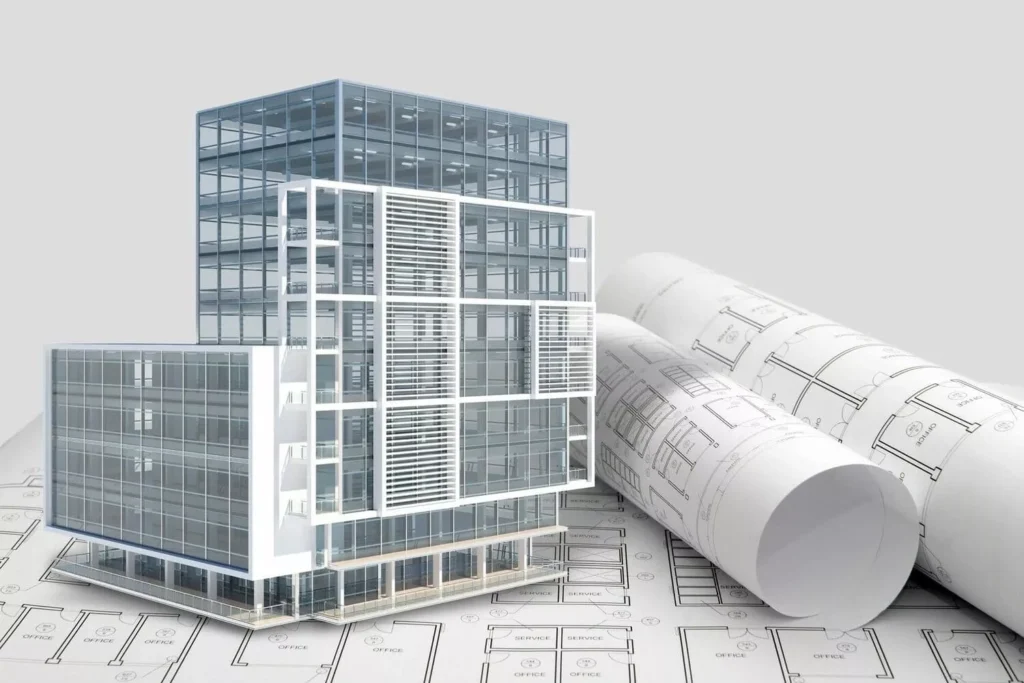
Before building starts, BIM modelling services for preconstruction produces a comprehensive digital representation of the project that may be examined and improved. By making design assumptions transparent and verifiable, these models aid in precise planning.
Benefits of BIM modeling in preconstruction include:
- Clear understanding of spatial relationships
- Early identification of constructability challenges
- Better alignment between architectural, structural, and MEP designs
When models are developed early, design gaps and inconsistencies are resolved before they become costly field issues.
BIM Coordination for Preconstruction Risk Control
Inadequate cross-disciplinary cooperation is one of the biggest causes of project risk. In a shared model environment, teams may examine and coordinate architectural, structural, and MEP systems through BIM coordination services for preconstruction.
Through coordinated BIM workflows, teams can:
- Detect clashes between systems
- Resolve conflicts collaboratively
- Reduce change orders and delays
Clash detection in preconstruction is especially valuable because resolving conflicts digitally is far less expensive than fixing them during construction.
How BIM Services Reduce Project Risk
Risk reduction is one of the strongest business cases for BIM adoption. BIM services risk reduction occurs through early identification, better planning, and improved communication.
Key risk areas addressed by BIM include:
- Design conflicts and coordination errors
- Inaccurate quantity and scope assumptions
- Stakeholder communication is lacking
- Late-stage design changes
By improving visibility and coordination, BIM helps teams reduce project risk in construction before it reaches the site.
BIM Services for Contractors in Preconstruction
Preconstruction planning has a direct impact on contractors’ profitability, scheduling dependability, and bidding accuracy. BIM services for contractors support more informed decisions during the estimating and planning stages.
Contractors use BIM to:
- Review design intent more clearly
- Validate quantities and sequencing
- Identify high-risk areas before mobilisation
This early insight improves bid confidence and reduces the likelihood of unexpected costs later in the project lifecycle.
BIM Coordination Before Construction Begins
Teams may digitally coordinate all systems before any physical work begins through BIM coordination before construction. This approach drastically lowers downstream problems with delays and rework.
Early coordination helps:
- Finalise routing of MEP systems
- Confirm spatial clearances
- Align construction sequencing
Coordination during preconstruction allows site crews to perform more predictably and with fewer interruptions.
Using BIM for Preconstruction Risk Management
Effective risk mitigation in construction projects starts with visibility. BIM supports risk management by allowing teams to simulate scenarios, review alternatives, and test design decisions.
Examples of BIM-driven risk management include:
- Analysing complex building geometry
- Reviewing construction phasing and access
- Identifying potential safety or sequencing issues
Instead of relying on reactive solutions, these insights enable teams to make proactive decisions.
BIM Services in Construction Planning and Decision Making
BIM services in construction planning provide a reliable foundation for early-stage decisions. Stakeholders can more efficiently assess design possibilities, coordination tactics, and sequencing methodologies with the use of visual and data-rich models.
This supports:
- Faster approvals
- Clearer stakeholder communication
- Better alignment between planning and execution
Decision-making based on BIM eliminates uncertainty, giving teams the confidence to proceed.
How BIM Services Support Long-Term Project Outcomes
BIM improves overall project performance in addition to lowering risk. Teams benefit from:
- Improved schedule reliability
- Better cost control
- Reduced RFIs and claims
- Smoother transition from planning to construction
Throughout the project lifecycle, BIM services have a positive impact on results by enhancing preconstruction planning.
Aligning BIM Services With Risk-Aware Preconstruction Planning
Risks are easiest and least expensive to manage during the preconstruction stage. The structure, visibility, and collaboration required to detect problems early and confidently plan projects are provided by BIM services.
Adopting BIM services as a key planning tool is now required for businesses looking to enhance preconstruction planning, lower project risk, and produce predictable results. Long before construction starts, it is a tactical advantage that encourages better choices.
For teams looking to strengthen preconstruction planning and reduce risk across complex projects, working with experienced BIM professionals can add significant value. Optimar Precon provides professional BIM services backed by 29+ years of group experience, advanced BIM tools, and dedicated BIM experts supporting projects from early planning through coordination. Exploring a structured BIM approach can help contractors and developers plan smarter, reduce risk, and execute with confidence.
FAQs
BIM reduces project risk by identifying design conflicts, coordination issues, and constructability challenges early in the preconstruction phase.
BIM improves coordination, visibility, and decision-making, helping teams plan more accurately before construction begins.
BIM services help contractors improve and reduce coordination risks, bid accuracy, and plan construction more effectively.
Yes. Early coordination and clash detection through BIM help prevent delays caused by design conflicts and late changes.
Absolutely. BIM provides value at any project scale by improving planning accuracy and reducing uncertainty.


