
BIM Modeling Services for Data Centers in USA
US data center construction is expanding rapidly across hyperscale, colocation, and edge projects. As a result, managing MEP coordination and clash detection can strain even strong project teams.
Our team understands US data center requirements, from system complexity to LOD standards. Therefore, we deliver coordinated BIM models that keep your programme moving.
Reach out to discuss your next data center project.
We Provide all types of Preconstruction Services like: BIM Modeling, CAD Drafting, Cost Estimation, Takeoff and Documentation.
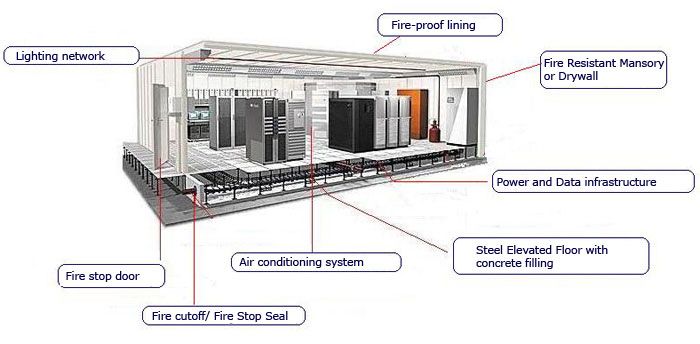
How We Support US Data Center Construction Teams?
US data center programmes combine mechanical, electrical, plumbing, and fire protection systems at a density that makes coordination errors costly and schedule impacts severe. Contractors and engineers across the country need BIM support that keeps pace with fast-moving programmes and handles multi-discipline complexity without slowing the design process down.
- Revit-based MEP models aligned to US data center design standards and LOD requirements
- Clash detection across electrical, mechanical, and cooling systems before site conflicts arise
- Cable tray, conduit, and power distribution routing modelled to construction-ready accuracy
- Federated model coordination across architecture, structure, and all MEP disciplines
- As-built BIM documentation produced to US contractor and developer handover standards
In addition, we integrate directly into your project workflow, providing support across every delivery phase with consistency and control.
Our BIM Modeling Scope for US Data Center Projects
Our team delivers specialist BIM modeling services for data centers in the USA, covering every major discipline across the full project lifecycle. From early coordination through construction documentation, we support contractors, engineers, and developers managing technically complex programmes nationwide.
Please Note : We are Flexible if you have any custom requirements for your Projects. Just submit your details and project requirements and our experts will connect with you shortly.


Technology We Use for US Data Center Projects
We use industry-standard BIM and coordination tools applied specifically to data center programme requirements. Every tool in our stack serves a defined purpose within the coordination workflow.




How US Data Center Infrastructure Shapes BIM Coordination Demands
Modern US data center construction creates a BIM coordination environment unlike any other sector. The combination of redundant MEP systems, strict tier classifications, and multi-discipline density means model accuracy is non-negotiable from day one.
The Technical Standards Governing US Data Center BIM
Every US data center programme operates within a defined compliance framework that directly affects BIM scope and model content.
- TIA-942 — Tier classification standards defining redundancy requirements and MEP pathway separation
- NEC — National Electrical Code governing all electrical system modelling across US states
- ASHRAE — Thermal and mechanical standards defining cooling system design parameters
- BICSI — Structured cabling and data infrastructure routing standards
Why Tier III and Tier IV Projects Demand More From BIM
Higher tier facilities require fully redundant MEP pathways — meaning every major system must be modelled twice, routed separately, and coordinated without compromising either path.
- Dual-path power distribution modelled and clash-checked independently
- Separate cooling routes maintained throughout the federated model
- System separation verified at every coordination review stage
- Redundancy compliance documented alongside standard clash reports
Regional Variation Across US Data Center Markets
US data center activity spans multiple regions, each carrying different utility environments and authority having jurisdiction requirements.
- Northern Virginia — highest concentration, large federated multi-building models
- Texas and Arizona — power access and cooling-intensive mechanical design
- Pacific Northwest and Oregon — environmental documentation requirements
- Ohio and Georgia — growing secondary markets with standard NEC and ASHRAE compliance
Get discount on your first project.
Just upload your details, and our team of experts will send you a quote at the earliest.
Handling Complex Multi-Trade BIM Coordination in US Data Center Programs
A US data center is not a building with MEP services added on top. It is an MEP programme housed inside a building envelope. Power infrastructure, cooling plant, cable management, fire suppression, and security systems collectively occupy more of the design coordination space than structure and architecture combined.
How We Manage System Interdependencies
When any one system shifts — a rerouted busway, a relocated CRAC unit, a revised cable tray level — the impact cascades across every other discipline in the model. Our team manages these interdependencies as a primary workflow, not as an edge case.
- Clash resolution assessed against redundancy path separation requirements
- Maintenance access clearances verified within the model before sign-off
- Structural penetration limits checked alongside MEP routing decisions
- Design team presented with resolution options — not just flagged conflicts
Our Approach to Phased Data Center Delivery
Many US data center campuses are delivered in phases — earlier buildings under construction while later phases remain in design coordination. Maintaining model consistency across phased delivery requires a structured approach applied from the outset.
- Phase boundaries defined in the model from project kickoff
- Coordination standards maintained consistently across all phases
- Model updates from construction phase fed back into later phase designs
- Clash detection rerun at each phase transition to catch cross-phase conflicts
Tier III and Tier IV Coordination Discipline
For US programmes operating under Tier III or Tier IV classification, redundant system pathways must be maintained throughout the model — not just noted in a specification.
- Dual-path systems modelled and coordinated independently
- System separation maintained across all discipline models
- Redundancy path integrity verified at every coordination review
- Compliance with TIA-942 tier requirements documented through the model
Serving US Data Center Contractors Nationally
We support data center construction projects across the full United States. Our team works with contractors, engineers, and developers in every major market and region nationwide.
Regions and Cities We Cover
- Mid-Atlantic — Northern Virginia, Maryland, Washington DC corridor
- South and Southeast — Texas, Georgia, Florida, Tennessee
- Southwest — Arizona, Nevada, New Mexico
- Pacific Northwest — Oregon, Washington
- Midwest — Ohio, Illinois, Indiana, Missouri
- Mountain West — Utah, Colorado, Idaho
Checkout Our more services available in USA:
- Preconstruction Services in USA
- Data Center Estimating Services in the USA
- Construction Estimating Services in USA
- BIM Modeling Services in USA
- Construction Takeoff Services in USA
Whether your programme is a hyperscale campus in Ashburn, a colocation facility in Dallas, a cooling-intensive build in Phoenix, or an edge deployment in a secondary market — we deliver consistent BIM coordination and documentation output regardless of location or project scale.
Specialist BIM Depth That US In-House Teams Rarely Have
Data center BIM coordination is a specialist discipline. The density of MEP systems, precision cable tray and conduit routing, cooling plant coordination complexity, and the pace of US data center programmes all create demands that exceed standard commercial BIM production capability.
Why US Contractors Choose Offshore Specialist Support
Most US contractors do not carry dedicated data center BIM expertise in-house. Building that depth internally means hiring specialists with specific Revit and coordination experience — expensive and difficult in the current US construction technology labour market.
- Specialist data center BIM expertise available without permanent hiring
- Cost structure that compares favourably against US BIM consultancy rates
- No sector learning curve — data center programmes are core to our daily workload
- Capacity available when your programme needs it — not tied to internal headcount cycles
What You Access When You Work With Our Team?
Working with Optimar Precon gives US contractors access to a team where complex MEP coordination and data center programmes specifically form a core part of the daily workload.
- Revit and Navisworks expertise applied to data center programmes daily
- Familiarity with TIA-942, NEC, ASHRAE, and BICSI requirements
- Structured coordination workflow — not ad hoc model production
- Consistent output standards across single projects and multi-campus programmes
Built Around US Data Center Project Requirements — Not Generic Templates
US data center construction operates within a precise technical environment. NEC electrical compliance, ASHRAE mechanical standards, TIA-942 tier documentation, and state-level regulatory variation all affect BIM scope at every project stage. Generic BIM support that ignores these conditions creates rework.
What Sets Our Approach Apart for US Projects
- Genuine familiarity with US data center delivery requirements and compliance frameworks
- Understanding of the coordination expectations of US general contractors and developers
- LOD standards applied correctly across every programme phase
- Offshore model delivering specialist depth without permanent team overhead
Optimar Precon gives US contractors a structure that holds up commercially — whether you are delivering a single facility or managing a multi-campus programme across multiple US states.
What US Data Center Contractors Ask Us?
Ans1: Yes. Our models are produced with NEC electrical compliance and ASHRAE thermal standards in mind. We coordinate MEP systems to the documentation accuracy that US data center programmes require, and our team is familiar with TIA-942 tier requirements that influence model content and scope at each design stage. We flag compliance-relevant coordination issues as part of the standard review process.
Ans2: Yes. We work with US contractors managing programmes across multiple states and regions. Our team handles the coordination workflow centrally, maintaining consistent model standards and LOD requirements regardless of which US state the project sits in. State-level building code variation that affects model scope is reviewed at project kickoff so output is calibrated correctly from the start.
Ans3: We do. Hyperscale campuses and colocation facilities carry different MEP densities, coordination priorities, and documentation scopes. Hyperscale programmes typically require federated multi-building coordination and phased model delivery. Colocation projects often demand tighter routing precision in smaller footprints. We structure our coordination approach to match the specific project type from the outset.
Ans4: Yes. Tier III and Tier IV facilities involve redundant MEP systems, dual-path power distribution, and cooling plant complexity that requires careful coordination to maintain system separation. Our team models these systems to the accuracy that US engineers and developers expect — producing federated models that hold up through detailed design review and construction documentation.
Ans5: We work in live design environments regularly. When design is still developing, we structure the coordination workflow to handle model updates systematically — running clash detection at agreed intervals and flagging emerging coordination issues to the design team as they arise. This keeps the model useful throughout design development rather than only at issue stages.